第六章:NV1与NV2的灾难:傲慢的代价(1994—1996)
Chapter Six: The Disasters of NV1 and NV2: The Price of Hubris (1994–1996)
1995年5月,在耗尽了整整两年的心血与上千万美元的风险投资后,英伟达的第一颗芯片NV1终于走下意法半导体(SGS-Thomson)的晶圆代工产线,被焊接在帝盟多媒体(Diamond Multimedia)推出的旗舰板卡“Edge 3D”上,隆重推向北美电脑卖场。
In May 1995, after devouring two full years of toil and more than ten million dollars in venture capital, NVIDIA's first chip, NV1, finally came off the wafer-fabrication line of SGS-Thomson, was soldered onto Diamond Multimedia's flagship board, the “Edge 3D,” and was pushed with full ceremony into the computer stores of North America.
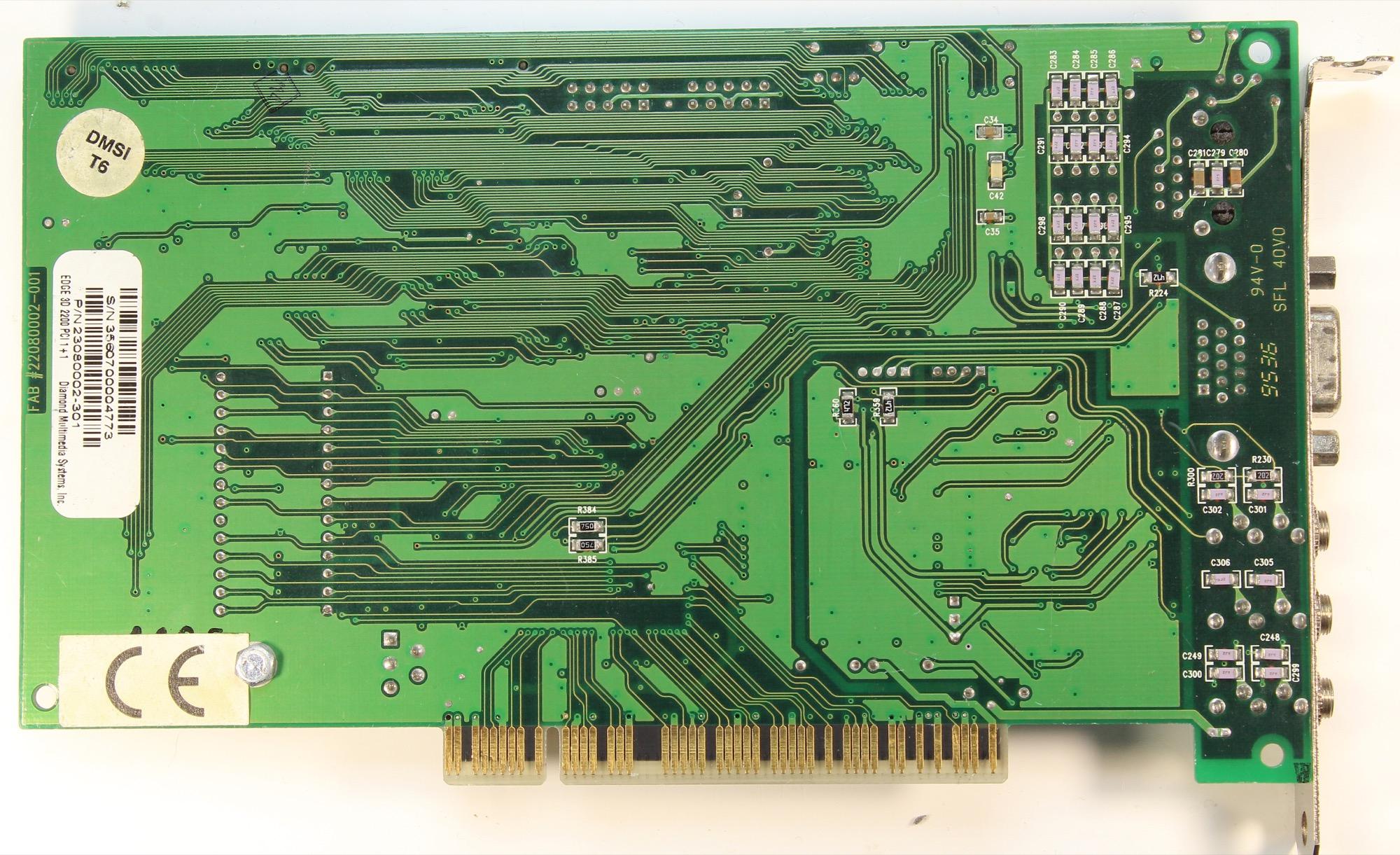
在桑尼维尔的庆功会上,三十二岁的黄仁勋举起塑料香槟杯,眼神里满是初为人父般的骄傲。在当时的技术指标表上,NV1简直是一头跨时代的怪兽:它集成了超过一百万个晶体管,不仅能渲染圆润平滑的三维二次曲面,还内置了足以媲美专业声卡的32声道波表合成引擎,甚至在显卡挡板上直接焊死了两个世嘉土星(Sega Saturn)游戏手柄插槽。
At the celebration in Sunnyvale, thirty-two-year-old Huang raised a plastic champagne flute, his eyes brimming with the pride of a new father. On the specification sheets of the day, NV1 was a monster out of its era: it integrated more than one million transistors, could render smooth, rounded 3D quadratic surfaces, carried a built-in 32-voice wavetable synthesis engine the equal of any professional sound card, and even had two Sega Saturn gamepad ports soldered straight onto the graphics card's bracket.
黄仁勋当时的算盘打得精妙绝伦:一个美国家庭买不起几千美元的专业设备,但只要花上两百九十九到四百美元买一张搭载NV1的板卡,就能瞬间把家里那台平庸的办公电脑变成“3D游戏机 + 高级音响 + 图形工作站”的三合一终极娱乐中心。
Huang's arithmetic at the time was exquisite: an American family could not afford professional equipment costing thousands of dollars, but for $299 to $400 — the price of a single NV1-equipped board — that mediocre office computer at home could be transformed in an instant into a three-in-one ultimate entertainment center of “3D game console, premium sound system, and graphics workstation.”
然而,当第一批货铺进全美各地的CompUSA电脑连锁店后,传回桑尼维尔的不是雪片般的补货订单,而是令人窒息的死寂,紧接着便是如潮水般涌来的退货箱。
Yet when the first shipments spread into CompUSA stores across America, what came back to Sunnyvale was not a snowstorm of restocking orders but a suffocating dead silence — followed, hot on its heels, by boxes of returns flooding in like a tide.
市场给这群自命不凡的硅谷天才上了一堂血淋淋的商业常识课:所谓的“全能”,在残酷的消费市场里往往意味着“全都不行”。
The market gave this pack of self-important Silicon Valley geniuses a bloody lesson in business common sense: in the merciless consumer market, so-called “good at everything” usually means “good at nothing.”
对于真正的硬核游戏玩家来说,他们电脑里早就插着行业标杆创新科技(Creative Labs)的“声霸卡”(Sound Blaster)。NV1强行捆绑的音频芯片不仅推高了显卡售价,还在DOS游戏环境下引发了灾难性的硬件中断冲突,导致电脑频繁蓝屏死机;而它传统的2D桌面显示性能——也就是普通人平时看表格、浏览文字最基础的功能——甚至还不如市面上几十美元的廉价显卡。
To genuine hardcore gamers, whose machines already carried the industry benchmark Sound Blaster from Creative Labs, NV1's forcibly bundled audio chip not only inflated the card's price but triggered catastrophic hardware interrupt conflicts under DOS games, sending computers crashing into blue screens again and again; and its conventional 2D desktop display performance — the most basic function ordinary people relied on for spreadsheets and reading text — was worse even than the bargain-basement graphics cards on the market that cost a few dozen dollars.
但真正将NV1彻底钉死在棺材板上的,是来自西雅图的一记重锤。
But what nailed the coffin shut on NV1 once and for all was a hammer blow from Seattle.
就在NV1苦苦寻找游戏开发商为其编写专属代码的同时,1995年8月,微软携划时代的Windows 95横扫全球,紧接着在次年正式推出了统御PC图形江湖的行业标准API——Direct3D(隶属于DirectX套件)。
While NV1 was still desperately hunting for game developers willing to write exclusive code for it, August 1995 saw Microsoft sweep the globe with the epochal Windows 95, and the very next year it formally released the industry-standard API that would reign over the PC graphics world: Direct3D (part of the DirectX suite).
当微软公布Direct3D底层规范的那一刻,桑尼维尔研发室里的空气仿佛被瞬间抽干了。
The moment Microsoft published the underlying specification of Direct3D, the air in the Sunnyvale research lab seemed to be sucked dry in an instant.
微软毫无悬念地选择了整个三维图形学界最通用的语言——三角形多边形(Polygon Triangles)。这意味着,全世界成千上万的游戏程序员只需要用三角形建模、按照微软的标准写一套代码,就能在所有兼容显卡上流畅运行;而英伟达孤芳自赏发明的“二次曲面(QTM)”,一夜之间成了与整个现代软件工业格格不入的异端方言!
Without suspense, Microsoft chose the most universal language of the entire 3D graphics world: polygon triangles. This meant that the world's legions of game programmers needed only to model with triangles and write one body of code to Microsoft's standard, and it would run smoothly on every compatible graphics card; NVIDIA's self-admiring invention, the “quadratic texture map (QTM),” became overnight a heretical dialect utterly alien to the whole of the modern software industry!
为了在Direct3D时代活下去,普里姆和工程师们不得不编写极其蹩脚的驱动程序,强行在底层把微软传过来的“三角形”换算成NV1的“二次曲面”进行模拟渲染。结果堪称一场视觉灾难:画面帧率暴跌得像幻灯片,原本该是笔直墙壁的游戏场景变得扭曲变形。与此同时,竞争对手3dfx推出了纯粹为三角形多边形而生的Voodoo加速卡——它不搞声卡捆绑,不搞花哨的手柄接口,只做一件事:把多边形渲染速度推向极致。搭载Voodoo的《雷神之锤》(Quake)画面一出,整个游戏界为之疯狂,NV1被衬托得像个滑稽而笨重的史前怪物。
To survive in the age of Direct3D, Priem and the engineers had no choice but to write excruciatingly awkward drivers that forcibly translated Microsoft's incoming “triangles” into NV1's “quadratic surfaces” for simulated rendering at the lowest level. The result was a visual catastrophe: frame rates collapsed into slideshows, and game scenes that should have shown straight walls twisted out of shape. Meanwhile rival 3dfx released the Voodoo accelerator, born purely for triangular polygons — no bundled sound card, no flashy gamepad ports, only one obsession: pushing polygon rendering speed to the absolute limit. The moment Quake ran on Voodoo, the entire gaming world went mad with delight, and NV1 stood exposed as a comical, lumbering prehistoric beast.
仓库里的NV1芯片堆积如山。分销商帝盟多媒体愤怒地停止了提货,整整二十五万颗已经封装完毕的芯片沦为无人问津的电子垃圾,将英伟达账面上最后一点流动资金死死冻在了库存里。
NV1 chips piled up in the warehouses like mountains. Distributor Diamond Multimedia angrily stopped taking delivery, and a full 250,000 fully packaged chips sank into electronic junk that no one wanted, freezing the last of NVIDIA's working capital dead inside inventory.
如果灾难到此为止,或许还只是一次常规的试错;更可怕的是,此时的英伟达正被绑在另一辆高速冲向悬崖的列车上——代号NV2的第二代芯片。
If the disaster had ended there, it might have passed as an ordinary stumble; far more terrifying, NVIDIA was at that very moment lashed to another train hurtling toward the cliff — the second-generation chip, codename NV2.
早在NV1研发后期,日本电子游戏巨头世嘉(Sega)看中了二次曲面技术在自家街机(如《VR战士》)移植上的潜力,与英伟达签下了一份价值七百万美元的战略研发合同,委托英伟达为其下一代家用主机(即后来Dreamcast的前身探索方案)定制核心3D图形芯片NV2。
Back in the late stages of NV1's development, the Japanese gaming giant Sega had seen the potential of quadratic-surface technology for porting its own arcade titles (Virtua Fighter among them) and signed a strategic R&D contract worth seven million dollars, commissioning NVIDIA to custom-build the core 3D graphics chip NV2 for its next-generation home console (the exploratory design that would precede the Dreamcast).
对于当时缺钱缺疯了的英伟达而言,世嘉预付的分期研发款简直就是维持呼吸的氧气管。但随着研发深入,世嘉日本的硬件工程团队也终于回过味来:多边形才是不可逆转的未来,二次曲面是一条死胡同。世嘉的高级工程师飞赴加州,强烈要求英伟达放弃二次曲面架构,改用传统三角形架构重写NV2。
For a company starved half-mad for cash, Sega's prepaid installment R&D payments were literally an oxygen tube keeping NVIDIA breathing. But as development deepened, Sega's hardware engineering team in Japan finally came to its senses: polygons were the irreversible future, and quadratic surfaces a dead end. Sega's senior engineers flew to California and demanded, forcefully, that NVIDIA abandon the quadratic-surface architecture and rewrite NV2 on the traditional triangle architecture.
然而,当时的首席技术官柯蒂斯·普里姆和年轻气盛的黄仁勋,陷入了技术创始人最容易犯的致命顽疾——沉没成本的执念与造物主的傲慢。
But chief technology officer Curtis Priem and the young, fiery Jensen Huang had fallen into the fatal affliction technical founders are most prone to: obsession with sunk costs and the arrogance of a creator.
他们坚信是世嘉的日本人不够懂数学,坚信只要把二次曲面的硬件算力再推高十倍,就能向全世界证明自己才是对的。英伟达顶着甲方的质疑,一意孤行地继续沿着二次曲面的深渊狂奔。直到1996年初,当NV2的早期硅片样品在实验室里跑起来时,连最死硬的内部工程师都沉默了:架构过于复杂臃肿,制造成本高得离谱,而在实际游戏画面表现上,依然被同期的多边形架构按在地上摩擦。
They were convinced the Japanese at Sega simply did not understand mathematics, convinced that if the hardware's quadratic-surface computing power were pushed another tenfold, the whole world would be made to see they had been right all along. Brushing aside the client's doubts, NVIDIA kept sprinting headlong down the abyss of quadratic surfaces. By early 1996, when the early NV2 silicon samples finally ran in the laboratory, even the most obdurate internal engineers fell silent: the architecture was overcomplicated and bloated, manufacturing costs were absurdly high, and in actual game visuals it was still being ground into the floor by the polygon architectures of the same era.
世嘉彻底失去了耐心,准备撕毁合约转投日本NEC的PowerVR架构;风险投资人唐·瓦伦丁的脸色阴沉得能滴出水来;账上的现金流已经见底,按照当时的烧钱速度,英伟达连下个季度的工资都发不出来。
Sega's patience ran out entirely; it prepared to tear up the contract and defect to NEC's PowerVR architecture in Japan. The face of venture investor Don Valentine grew dark enough to drip water. The cash flow on the books had hit bottom, and at the prevailing burn rate, NVIDIA could not even make next quarter's payroll.
三十三岁的黄仁勋独自坐在空荡荡的办公室里,第一次听到了死神磨刀的声音。
Thirty-three-year-old Huang sat alone in the emptied office and, for the first time in his life, heard the sound of Death whetting his blade.
他不得不亲手执行创业以来最残忍的一道命令——大裁员。
He had no choice but to carry out, with his own hands, the cruelest order since the company's founding — the great layoff.
那是1996年春天硅谷最凄凉的一幕。在这之前,为了备战NV1的商业化与NV2的研发,英伟达已经招募了超过一百名员工。这些人里,有许多是放弃了Sun、SGI和LSI高薪厚禄、冲着黄仁勋描绘的宏伟蓝图投奔而来的顶尖人才,不少人甚至刚刚在湾区贷款买下房子、迎来新生的婴儿。
It was the bleakest scene of the Silicon Valley spring of 1996. Before it, preparing for NV1's commercialization and NV2's development, NVIDIA had recruited more than one hundred employees. Many of them were top talent who had walked away from high salaries and rich benefits at Sun, SGI, and LSI, drawn by the grand blueprint Huang painted; some had only just taken out mortgages on houses in the Bay Area, or greeted newborn infants.
没有猎头公司的缓冲,也没有人力资源部门代劳。黄仁勋把全公司一百多号人召集到大厅里,站在众人面前,声音沙哑却没有任何粉饰地摊开了公司濒临破产的账本。
There was no headhunting firm to soften the blow, no human-resources department to do the deed. Huang gathered the company's hundred-odd people in the hall, stood before them, and with a hoarse voice and not a shred of varnish laid open the ledger of a company on the brink of bankruptcy.
在一个下午的时间里,英伟达裁掉了超过百分之六十的员工。一百多人的团队被硬生生砍到只剩三十六个人——恰好是维持一颗芯片底层设计、验证与驱动开发所需的最小生命单元。
In the space of a single afternoon, NVIDIA cut more than sixty percent of its staff. A team of more than one hundred was hacked down to just thirty-six people — precisely the smallest living unit required to sustain the low-level design, verification, and driver development of one chip.
那天傍晚,桑尼维尔的办公区里到处是封箱胶带撕裂的刺耳声响。被裁掉的工程师们抱着装满私人物品的纸箱,沉默地走过走廊。黄仁勋没有躲在办公室里,他站在门口,红着眼眶与每一个离开的员工握手、拥抱,向他们道歉:“对不起,是我判断错了方向,把大家带进了沟里。如果有一天英伟达活过来了,我一定请你们回来。”(几年后,当英伟达起死回生并成功上市时,黄仁勋真的兑现诺言,把当年许多被迫离开的老员工重新请回了公司。)
That evening, the screech of packing tape tearing filled the Sunnyvale offices. The laid-off engineers walked the corridors in silence, hugging cardboard boxes full of their belongings. Huang did not hide in his office; he stood at the door, red-eyed, shaking hands with and embracing every departing employee, apologizing to each: “I'm sorry — I judged the direction wrong and led everyone into the ditch. If one day NVIDIA comes back to life, I will bring you all back.” (A few years later, when NVIDIA rose from the dead and went public, Huang truly made good on that promise, welcoming many of the old employees forced out that day back into the company.)
当最后一个抱着纸箱的背影消失在夕阳下的停车场,诺大的办公楼瞬间空了一大半,只剩下满地散落的网线、空荡荡的办公桌,以及留下来的三十六名核心骨干死寂般的呼吸声。
When the last figure clutching a cardboard box vanished into the parking lot under the setting sun, the vast office building emptied by more than half in an instant, leaving only Ethernet cables strewn across the floor, vacant desks, and the deathly quiet breathing of the thirty-six core veterans who remained.
那天深夜回到家中,一贯在妻子洛丽面前报喜不报忧的黄仁勋,坐在餐桌旁久久没有说话。三十三岁的他,距离三十岁生日创立公司仅仅过去了三年,昔日的意气风发被碾得粉碎。他终于无比清醒地意识到,导致这场灭顶之灾的罪魁祸首不是微软,不是3dfx,而是自己骨子里那种“为了与众不同而与众不同”的技术虚荣心。
Late that night he returned home. Huang, who before his wife Lori had always reported only good news and never bad, sat at the dinner table for a long time without speaking. He was thirty-three, just three years past the thirtieth birthday on which he had founded the company, and his old high-spiritedness had been ground to powder. At last, with unbearable clarity, he saw that the culprit of this annihilation was not Microsoft, not 3dfx, but the vanity in his own bones — the urge to be different for difference's sake.
在那个彻夜未眠的夜晚,黄仁勋完成了一次脱胎换骨的心理献祭。他彻底杀死了体内那个孤芳自赏的学院派工程师,取而代之的,是一个只问生死、极度敬畏市场规律的冷酷现实主义统帅:
Over that sleepless night, Huang performed a psychological sacrifice that remade him from the marrow out. He killed, once and for all, the academic engineer inside him who admired only his own work, and in his place stood a cold realist commander who asked only of life and death and held the laws of the market in absolute awe:
- 彻底砍掉二次曲面,哪怕过去三年的全部专利与代码归零,下一代芯片(NV3)也必须百分之百全面拥抱微软Direct3D的三角形多边形标准;
- Quadratic surfaces would be cut down entirely — even if every patent and every line of code from the past three years were reduced to zero, the next-generation chip (NV3) had to embrace Microsoft's Direct3D triangle-polygon standard one hundred percent;
- 砍掉所有冗余的多媒体声卡捆绑,把每一颗晶体管的预算都压在极致的3D图形吞吐量上。
- All redundant multimedia sound-card bundling would be cut, so that every transistor's budget was pressed into the service of ultimate 3D graphics throughput.
方向终于看清了,但一个更绝望的死结横亘在眼前:重新设计一颗全新的芯片至少需要九到十二个月,而此时英伟达银行账户里的剩余资金,只够这三十六个人再发三十天的工资。没有投资人愿意再给一家连败两场的烂摊子掏一分钱。
The direction was finally clear, but a more desperate knot lay athwart the road: redesigning a brand-new chip would take at least nine to twelve months, and the money left in NVIDIA's bank account was enough to pay these thirty-six people for thirty more days. Not a single investor was willing to throw another cent at a shambles that had lost two fights in a row.
唯一的生路,竟然在太平洋彼岸的东京——在那家刚刚被英伟达搞砸了主机芯片合同的甲方,日本世嘉公司的总部大楼里。
The only road out, improbably, lay across the Pacific, in Tokyo — inside the headquarters of Sega of Japan, the very client whose console-chip contract NVIDIA had just wrecked.
1996年夏末,黄仁勋买了一张飞往东京成田机场的机票。在万米高空的颠簸机舱里,他要去执行一个在所有商业教科书看来都无异于痴人说梦的自杀式任务:他要当面向世嘉总裁承认英伟达的芯片彻底失败了,请求对方终止合同;然后,他还要张开嘴,要求这位被他坑惨了的日本巨头,白白把合同里剩下的五百万美元尾款付给英伟达。
In the last days of the summer of 1996, Huang bought a ticket to Narita Airport, Tokyo. From a cabin jolting along ten thousand meters above the earth, he was flying to execute a suicide mission that every business textbook would dismiss as the dreaming of a lunatic: he would admit to the president of Sega, face to face, that NVIDIA's chip had failed outright, and ask Sega to terminate the contract; and then he would open his mouth and ask this Japanese giant he had so badly burned to hand over, for nothing, the remaining five million dollars of the contract's final payment.
因为如果拿不到这五百万美元,英伟达将在下个月底原地死亡。
Because if that five million dollars could not be secured, NVIDIA would die where it stood by the end of the following month.