第八章:RIVA 128的绝地反击与“黄氏定律”(1997—1998)
Chapter Eight: RIVA 128's Counterattack from the Brink and Huang's Law (1997–1998)
1997年8月,当搭载RIVA 128芯片的帝盟(Diamond)Viper V330与华硕、STB板卡正式铺向全球市场时,整个3D图形界听到了秩序碎裂的声音。
In August 1997, when the Diamond Viper V330 carrying the RIVA 128 chip, together with ASUS and STB boards, formally spread across the global market, the entire 3D graphics world heard the sound of order shattering.
此前的显卡江湖,霸主3dfx的Voodoo显卡虽然在游戏画面上独孤求败,却有着一个致命的先天残疾——它是一块纯粹的“3D子卡”,完全不具备基础的2D桌面显示能力。玩家要想打游戏,必须在机箱里同时插上一块普通2D显卡和一块Voodoo加速卡,再用一根粗笨的外部线缆把两张卡串联起来,不仅价格昂贵,信号衰减还经常导致桌面文字发虚。而另一边的老牌劲旅ATI与Matrox,虽然2D清晰,3D加速性能却孱弱得可怜。
In the graphics-card world before this, the reigning champion 3dfx, whose Voodoo card stood unbeaten in game visuals, carried one fatal congenital disability — it was a pure “3D daughter card,” wholly without basic 2D desktop display capability. To play games, a player had to slot both an ordinary 2D graphics card and a Voodoo accelerator into the case, then daisy-chain the two cards with a clumsy external cable — not only expensive, but with signal degradation that often left desktop text blurry. The old-line powers ATI and Matrox, on the other side, rendered crisp 2D, yet their 3D acceleration was pitifully weak.
RIVA 128像一柄重剑,精准地劈在了两大阵营最脆弱的接缝处。
RIVA 128 fell like a great heavy sword, striking with precision into the most fragile seam between the two camps.
在方寸之间的硅片上,黄仁勋团队塞进了三百五十万个晶体管,并史无前例地采用了128位显存总线(当时绝大多数对手还停留在64位)。它不仅是一张单卡搞定2D办公、视频播放与顶级3D渲染的“全能杀手”,而且由于从第一天起就原生围绕微软Direct3D三角形标准打造,其在Direct3D游戏下的帧率表现甚至一举反超了不可一世的Voodoo!
Onto a sliver of silicon no bigger than a square inch, Huang's team packed 3.5 million transistors, and adopted, for the first time in the industry, a 128-bit memory bus (the overwhelming majority of rivals were still stuck at 64 bits). It was not only an “all-purpose killer” — a single card handling 2D office work, video playback, and top-tier 3D rendering — but, built from its first day natively around Microsoft's Direct3D triangle standard, its frame rates under Direct3D games outright overtook the once-invincible Voodoo!
更重要的是价格。得益于极致的集成度与没有冗余声卡累赘的精简架构,搭载RIVA 128的显卡零售价比买一套Voodoo组合便宜了整整三分之一,甚至直接杀进了戴尔(Dell)、康柏(Compaq)与Gateway等品牌整机巨头的采购清单。
More important still was the price. Thanks to extreme integration and a lean architecture with no redundant sound card dragging behind it, graphics cards carrying RIVA 128 retailed a full one-third cheaper than buying a Voodoo combination, and cut straight onto the procurement lists of brand-name system giants like Dell, Compaq, and Gateway.
雪片般的订单瞬间淹没了桑尼维尔的传真机。
A blizzard of orders instantly buried the fax machines of Sunnyvale.
短短四个月时间,RIVA 128狂卖超过一百万颗,为濒临枯竭的英伟达狂揽数千万美元现金流。曾经门可罗雀的弗里蒙特大道办公室外,如今停满了各大PC厂商采购副总裁的租用轿车;几个月前还对英伟达避之唯恐不及的华尔街与沙丘路投资人,重新拿着支票排起了长队。
In just four months, RIVA 128 sold more than one million units, hauling tens of millions of dollars of cash flow into a nearly dried-up NVIDIA. Outside the Fremont Avenue office, once so deserted you could catch sparrows at the door, rented sedans of procurement vice presidents from every major PC maker now lined the curb; the Wall Street and Sand Hill Road investors who only months earlier had fled NVIDIA's very shadow were queuing up once more, checks in hand.
但就在全公司准备开香槟庆祝劫后余生时,一个更凶险的瓶颈卡住了黄仁勋的咽喉:产能。
But just as the whole company reached for champagne to toast its survival, a more dangerous bottleneck closed around Huang's throat: capacity.
当时的英伟达主要依赖欧洲的意法半导体(SGS-Thomson)代工,但面对百万级爆发的订单与即将到来的工艺微缩战,欧洲老牌大厂缓慢的排期根本跟不上硅谷的生死时速。就在1997年至1998年的这个关键十字路口,一通越洋电话,开启了人类半导体史上最伟大、最稳固的一段商业同盟。
NVIDIA at the time relied chiefly on Europe's SGS-Thomson for foundry manufacturing, but against million-scale exploding orders and the process-shrink war about to begin, the slow scheduling of that old European giant simply could not keep pace with Silicon Valley's life-or-death speed. At this critical crossroads of 1997 and 1998, one transpacific phone call opened the greatest and most durable commercial alliance in the history of the semiconductor.
电话那头,是太平洋彼岸台湾新竹科学园区的掌门人——六十六岁的张忠谋(Morris Chang)。
On the other end of the line was the master of the Hsinchu Science Park across the Pacific in Taiwan — the sixty-six-year-old Morris Chang.
彼时由张忠谋创立十年的台湾积体电路制造公司(TSMC,台积电),正在全球半导体界掀起一场静悄悄的革命。在此之前,英特尔与AMD的信条是“没有晶圆厂就不配叫芯片公司”;而张忠谋开创的纯晶圆代工(Foundry)模式,向全世界承诺“台积电永远不设计自己的芯片,永远不与客户竞争”。
At that moment Taiwan Semiconductor Manufacturing Company (TSMC), founded by Morris Chang ten years earlier, was stirring a silent revolution through the global semiconductor world. Until then, the creed of Intel and AMD had been “without your own fab, you have no right to call yourself a chip company”; but the pure foundry model Chang had pioneered made a promise to the entire world: TSMC would never design its own chips, and would never compete with its customers.
其实早在之前,年轻的黄仁勋曾给张忠谋写过一封信,询问台积电能否为英伟达代工芯片,信件石沉大海后他又托人递话。直到1997年夏天的一个周五傍晚,台积电新竹总部的电话直接打进了英伟达嘈杂的开放式办公室。
In fact, long before this, the young Jensen Huang had once written Morris Chang a letter asking whether TSMC might manufacture chips for NVIDIA; when the letter sank without a trace, he sent word again through intermediaries. Not until a Friday evening in the summer of 1997 did the phone from TSMC's Hsinchu headquarters ring straight into NVIDIA's clamorous open-plan office.
正在和大伙激烈争吵技术细节的黄仁勋接起听筒,里面传来一个沉稳、略带磁性口音的声音:“我是张忠谋。”
Huang, in the middle of a heated argument over technical details, picked up the receiver, and a calm voice with a faintly magnetic accent came through: “This is Morris Chang.”
三十四岁的黄仁勋瞬间从椅子上弹了起来,冲着周围正在大喊大叫打乒乓球和争辩代码的工程师们做了一个凶狠的抹脖子噤声手势:“全都给我闭嘴!小声点!是Morris Chang!”
Thirty-four-year-old Huang shot up out of his chair and, to the engineers around him who were shouting over ping-pong and arguing about code, made a fierce slash-across-the-throat gesture for silence: “Everybody shut up! Quiet down! It's Morris Chang!”
在这通短短十几分钟的跨洋电话里,两位相差三十二岁、同样流淌着华人血液、同样在美国工程界摸爬滚打出来的灵魂,产生了奇妙的共振。不久后,张忠谋飞赴加州,亲自造访了那家依然寒酸局促、连像样会客室都没有的英伟达办公室。看着眼前这个满眼血丝、把“距离倒闭只有三十天”挂在嘴边的年轻人,见惯了硅谷浮夸骗子的张忠谋断言:这是一家真正能成大事的公司。
In that brief transpacific call of a little more than ten minutes, two souls thirty-two years apart in age — both with Chinese blood in their veins, both scarred and seasoned in the trenches of America's engineering world — resonated in a strange harmony. Not long after, Morris Chang flew to California and called in person on NVIDIA's still shabby, cramped office, a place without even a proper reception room. Looking at the young man before him, bloodshot-eyed, “thirty days from going out of business” forever on his lips, Chang — who had seen every variety of Silicon Valley swindler and showman — pronounced his verdict: this was a company that could truly achieve great things.
1998年初,黄仁勋第一次以大客户统帅的身份飞抵台湾新竹,握住了张忠谋的手。
In early 1998, Huang flew to Hsinchu, Taiwan, for the first time as the commanding general of a major customer, and took Morris Chang's hand.
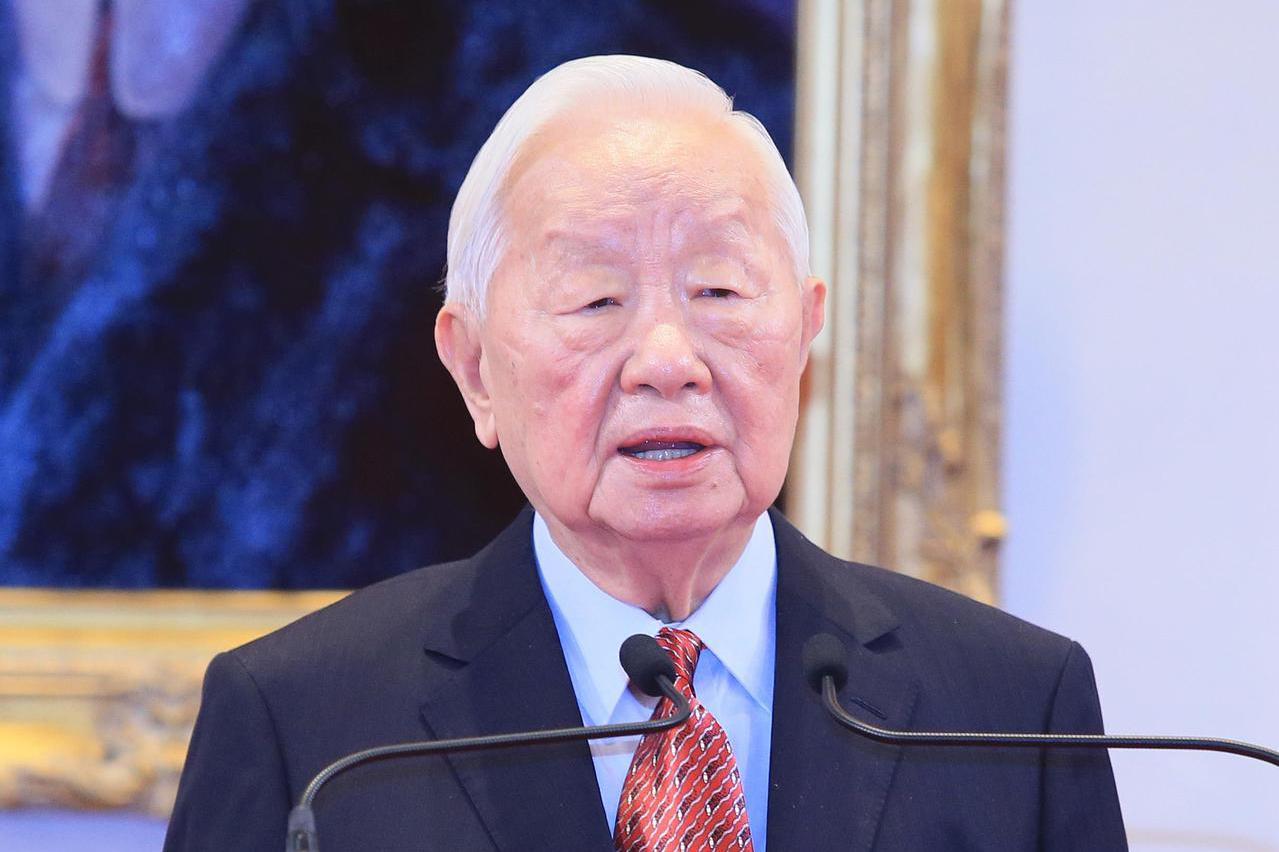
两人在竹科的办公室与台北的餐桌上定下盟约:台积电将最先进的0.35微米及即将量产的0.25微米产能毫无保留地向英伟达敞开;而英伟达则把自己的身家性命全部托付给台积电的晶圆产线。没有人能想到,这次握手竟开启了长达近三十年的共生传奇——英伟达日后用天文数字般的订单把台积电推上了全球代工之王的宝座,而台积电则用独步天下的先进制程,为黄仁勋铸造了从GeForce到Blackwell、Rubin的每一把屠龙刀。两人更结下了超越商业利益的忘年之交,甚至在二十多年后张忠谋的自传与公开访谈中,黄仁勋始终是他最为欣赏的硅谷企业家。
Across offices in the Science Park and dinner tables in Taipei, the two struck their covenant: TSMC would open its most advanced 0.35-micron capacity, and the 0.25-micron capacity then nearing mass production, to NVIDIA without reserve; and NVIDIA would entrust its very life to TSMC's wafer production lines. No one could have imagined that this handshake would open a symbiotic legend nearly thirty years long — NVIDIA would later push TSMC onto the throne of the world's foundry king with orders of astronomical magnitude, while TSMC would use advanced processes unmatched under heaven to forge for Huang every dragon-slaying blade from GeForce to Blackwell and Rubin. The two men also formed a friendship across generations that transcended commercial interest; even twenty-some years later, in Morris Chang's autobiography and public interviews, Jensen Huang remained the Silicon Valley entrepreneur he admired most.
有了台积电这座深不可测的弹药库在背后撑腰,手握充沛现金的黄仁勋没有享受哪怕一天的安逸,反而露出了比濒死时更加冷酷的獠牙。
With the fathomless arsenal of TSMC at his back, Huang, flush with ample cash, did not permit himself even a single day of ease; instead he bared fangs colder than any he had shown on the brink of death.
1998年初,在桑尼维尔的全员战略会上,黄仁勋看着还在为RIVA 128破百万销量沾沾自喜的团队,往所有人头上浇了一盆冰水。
In early 1998, at the all-hands strategy meeting in Sunnyvale, Huang watched a team still preening itself over RIVA 128 breaking the million-unit mark — and dumped a basin of ice water over every head in the room.
当时站在高山之巅的依然是3dfx——他们刚刚推出了性能狂暴的Voodoo 2显卡,支持两张显卡并联(SLI),把全球硬核玩家迷得神魂颠倒。3dfx的高管们住在硅谷的豪宅里,开着保时捷,嘲笑英伟达的RIVA 128虽然卖得多,但在画质精细度和驱动稳定性上只是“廉价的二流货色”。
Still standing on the summit of the mountain was 3dfx — it had just released the ferocious Voodoo 2 graphics card, with support for two cards running in parallel (SLI), driving hardcore gamers worldwide into ecstatic rapture. 3dfx's executives lived in Silicon Valley mansions and drove Porsches, sneering that NVIDIA's RIVA 128, for all its sales, was nothing but “cheap second-rate goods” in image fidelity and driver stability.
黄仁勋没有反驳对手的嘲笑。相反,他把媒体评测中骂RIVA 128画质粗糙、边缘锯齿严重的负面文章全部打印出来,贴满了研发室的墙壁。随后,他在白板上写下了一条改写整个半导体工业物理节拍的铁血军规——外界后来将其敬畏地称为“黄氏定律”的雏形:
Huang did not answer his rivals' jeers. Instead, he printed out every negative article from the media reviews that savaged RIVA 128's crude image quality and jagged edges, and papered the walls of the engineering room with them. Then he wrote on the whiteboard an iron rule of blood and discipline that would rewrite the physical tempo of the entire semiconductor industry — what the outside world would later, with awe, come to call the embryo of “Huang's Law”:
英特尔奉行的“摩尔定律”,是每十八到二十四个月将芯片性能翻一番;而黄仁勋宣布,从今天起,英伟达必须每六个月发布一代全新产品,性能直接翻倍!
The “Moore's Law” Intel abided by doubled chip performance every eighteen to twenty-four months; Huang declared that from this day forward, NVIDIA must ship a wholly new product generation every six months, with performance doubling outright!
会议室里一片哗然。马拉科夫斯基和大卫·柯克手下的资深架构师们几乎以为老板疯了:设计一颗几百万晶体管的芯片至少需要一年半,怎么可能每六个月就掏出一代新产品?一旦中间任何一个环节卡壳,全公司的人都会活活累死!
Uproar filled the conference room. The senior architects under Malachowsky and David Kirk nearly concluded their boss had gone mad: designing a chip of several million transistors took at least a year and a half — how could a new generation of product be produced every six months? If any single link in the middle ever jammed, the whole company would be worked literally to death!
黄仁勋用一套天才般的“三班倒平行流水线(Three-Team Cadence)”,把这个不可能的数学题变成了现实。
Huang turned this impossible equation into reality with a stroke of genius: parallel assembly lines rotating in three shifts — the “Three-Team Cadence.”
他动用RIVA 128赚来的全部利润疯狂招兵买马,将工程研发部门一分为三——春之队、秋之队与下一代先遣队。当第一支团队正在冲刺当年春季芯片的最后流片时,第二支团队已经在IKOS仿真器上调试秋季芯片的核心管线,而第三支团队已经在纸面上推演明年春季的全新微架构!三支队伍像齿轮一样精密咬合,共享底层IP模块与驱动代码库,让竞争对手面对的不再是一家公司,而是一挺永不停歇、每半年就倾泻一轮重型炮火的加特林机枪。
He threw every dollar of RIVA 128's profits into a frantic recruiting drive and split the engineering R&D organization into three — the Spring Team, the Autumn Team, and the Next-Generation Vanguard. While the first team was sprinting toward the final tape-out of that year's spring chip, the second team was already tuning the core pipeline of the autumn chip on the IKOS emulator, and the third team was already deriving the brand-new microarchitecture of the following spring on paper! The three teams meshed with the precision of gears, sharing low-level IP blocks and the driver codebase, so that what rivals faced was no longer a company but a Gatling gun that never rested, unleashing a round of heavy artillery every half year.
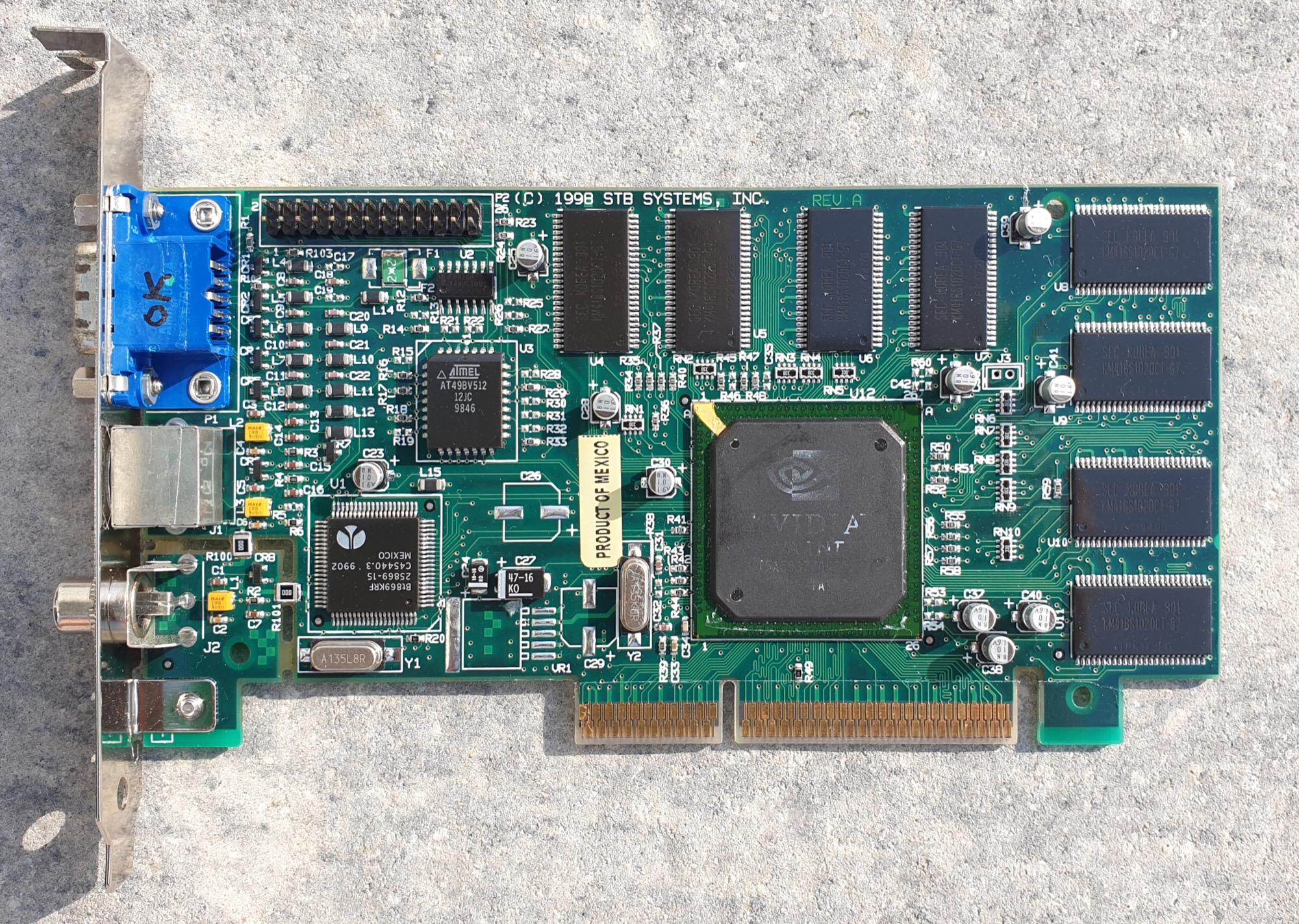
这套绞肉机战术的第一颗重磅炮弹,在1998年春末夏初呼啸而出——代号NV4,正式定名为RIVA TNT(TwiN Texel,双纹理引擎)。
The first heavy shell of this meat-grinder strategy howled out in the late spring and early summer of 1998 — codename NV4, formally named RIVA TNT (TwiN Texel, the twin-texel engines).
这个充满火药味的名字(TNT炸药),直白地宣告了黄仁勋要炸平3dfx霸权的野心。单颗RIVA TNT芯片首次在业内实现了单时钟周期同时处理两个像素纹理的能力,一举抹平了与Voodoo 2的画质与性能差距,紧接着半年后出炉的RIVA TNT2更是彻底完成了对Voodoo 3的全面碾压。
That gunpowder-laden name (TNT, the explosive) baldly announced Huang's ambition to blow the hegemony of 3dfx flat. A single RIVA TNT chip achieved, for the first time in the industry, the ability to process the textures of two pixels in a single clock cycle, erasing the gap with Voodoo 2 in image quality and performance at one stroke; and the RIVA TNT2, delivered half a year later, completed the total crushing of Voodoo 3.
傲慢的3dfx被打懵了。当他们还在按部就班地用十八个月周期慢吞吞打磨芯片,甚至愚蠢地决定斥巨资收购板卡厂STB自己建工厂生产显卡、从而得罪了全天下所有板卡合作伙伴时,黄仁勋趁虚而入,张开双臂把华硕、微星、技嘉、丽台等台湾板卡大厂全部收归麾下,织就了一张覆盖全球电脑城的庞大分销帝国。
The arrogant 3dfx was stunned. While it was still, step by unhurried step, polishing its chips on an eighteen-month cycle — and while it made the foolish decision to spend a fortune acquiring the board maker STB and build its own factories to produce graphics cards, thereby offending every board partner under heaven — Huang slipped in through the gap, opened his arms, and gathered the great Taiwanese board makers ASUS, MSI, Gigabyte, and Leadtek entirely under his banner, weaving a vast distribution empire spanning the computer shops of the whole world.
从1996年秋天只剩三十六个人、靠世嘉五百万美元苟延残喘的破落户,到1998年底年营收飙升至一点五八亿美元的硅谷当红炸子鸡,黄仁勋只用了短短二十四个月。
From a pauper's hovel of thirty-six people in the autumn of 1996, gasping along on Sega's five million dollars, to Silicon Valley's blazing new darling with annual revenue soaring to 158 million dollars by the end of 1998, Jensen Huang needed only twenty-four short months.
在这场向死而生的炼狱突围中,英伟达的灵魂被永久性地定型了。
In this purgatorial breakout — living toward death — the soul of NVIDIA was set in permanent form.
黄仁勋把“距离倒闭只有三十天”的恐惧,刻进了每一个新入职工程师的骨髓里。他不再允许公司里存在任何慢条斯理的贵族做派,确立了扁平、高压、快如闪电的战时体制。与此同时,三位联合创始人的权力天平也在这场战役后彻底定格:隐士般的普里姆逐渐退居幕后研究超前架构(并于几年后彻底退休离开),沉稳的马拉科夫斯基专心镇守工程大后方,而三十五岁的黄仁勋,已经成长为这艘高速战列舰上唯一不可挑战的最高统帅。
Huang carved the terror of “thirty days from going out of business” into the marrow of every newly hired engineer. He no longer permitted the company any leisurely aristocratic airs, establishing a flat, high-pressure, lightning-fast wartime regime. Meanwhile, the balance of power among the three co-founders froze for good after this campaign: the hermit-like Priem gradually withdrew behind the scenes to research architectures ahead of their time (and retired from the company entirely a few years later), the steady Malachowsky kept watch over the engineering heartland, and thirty-five-year-old Huang had grown into the sole, unchallengeable supreme commander of this high-speed battleship.
1998年的最后一个冬夜,圣克拉拉的一处新园区工地上灯火通明——桑尼维尔那间狭小的旧办公室已经装不下膨胀至数百人的英伟达大军了。黄仁勋站在寒风中,手里拿着承销商摩根士丹利刚刚递交过来的首次公开募股(IPO)招股书草稿。
On the last winter night of 1998, a new campus construction site in Santa Clara blazed with light — the cramped old office in Sunnyvale could no longer hold an NVIDIA army swollen to several hundred. Huang stood in the cold wind, holding the draft prospectus for the initial public offering (IPO) just handed over by the underwriter Morgan Stanley.
他熬过了破产,战胜了傲慢,杀穿了三十多家竞争对手的尸山血海。而在即将到来的1999年,他不仅要敲响纳斯达克的上市钟声,更准备向全人类的科技词典里,亲手写下一个统治未来三十年的全新词汇——GPU。
He had survived bankruptcy, conquered hubris, and cut his way through the mountains of corpses and seas of blood of more than thirty rivals. And in the coming year of 1999, he would not only ring the listing bell of NASDAQ; he was preparing to write, with his own hand, into the technological dictionary of all humankind, a new word that would rule the coming thirty years — GPU.
(第二部《向死而生》完)
(End of Part Two: Living Toward Death)