第九章:重新定义GPU与纳斯达克钟声(1999—2005)
Chapter Nine: Redefining the GPU and the NASDAQ Bell (1999–2005)
1999年1月22日,华尔街正处于互联网泡沫最滚烫的沸点。
January 22, 1999. Wall Street sat at the roiling boil of the internet bubble's hottest moment.
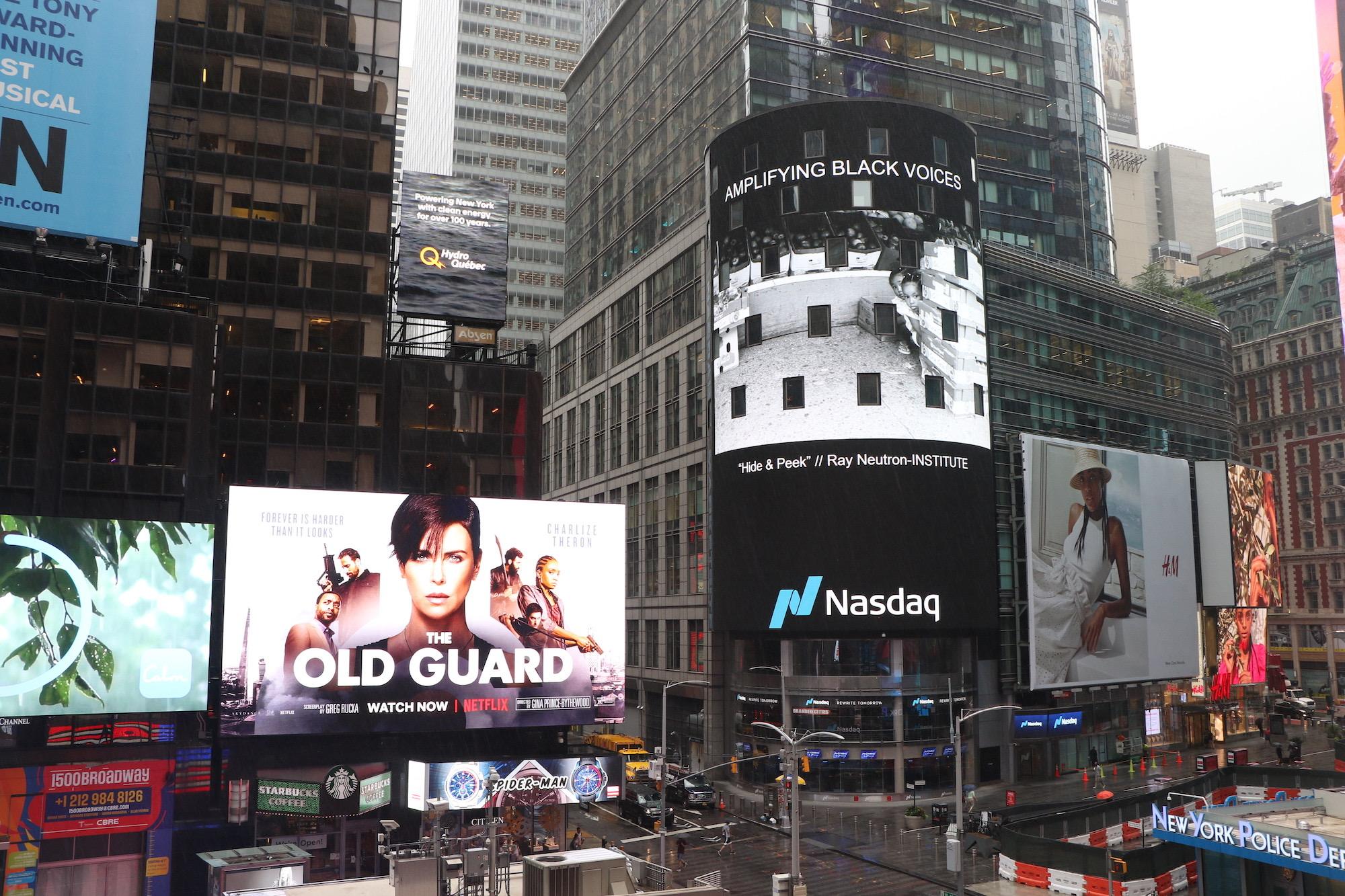
在这一天,成立不满六年的英伟达正式登陆纳斯达克交易所,股票代码NVDA,发行价定为每股12美元。开盘钟声敲响后,狂热的买盘瞬间将股价推高至近20美元,公司市值稳稳突破五亿美元大关。
On that day NVIDIA, less than six years old, formally landed on the NASDAQ exchange under the ticker NVDA, its shares priced at $12 apiece. The instant the opening bell rang, frenzied buying swept the price up toward $20, and the company's market value sailed firmly past the half-billion-dollar mark.
那天在圣克拉拉新总部举行的庆祝派对上,香槟酒液四处飞溅。三年前那批在1996年寒冬里被黄仁勋挥泪裁掉、后来又被他守信请回公司的老员工们,看着电脑屏幕上跳动的数字,发现自己手里的期权一夜之间变成了百万富翁的入场券。年近三十六岁的黄仁勋站在人群中央,脸上带着克制的微笑——按照当时的持股比例,他的账面身家已悄然跃上数千万美元。
Champagne sprayed across the celebration party at the new headquarters in Santa Clara. The old employees — the ones Huang had tearfully cut in the winter of 1996 and then, true to his word, invited back — watched the numbers flicker on their screens and discovered that the options in their hands had overnight become tickets into the ranks of millionaires. Huang, on the verge of turning thirty-six, stood at the center of the crowd with a restrained smile; by the ownership stakes of the day, his paper fortune had quietly leapt into the tens of millions of dollars.
但熟悉黄仁勋的高管们很快发现,上市敲钟带来的喜悦,在他身上甚至没能维持超过二十四个小时。
But the executives who knew Jensen Huang well soon noticed that even the joy of ringing the listing bell could not last twenty-four hours on him.
就在IPO完成后的第一个周一清晨,黄仁勋照常六点半出现在办公室,召集核心工程团队开会。他的开场白依然是那句冷冰冰的咒语:“忘掉股票代码。英特尔随时可能杀进来,3dfx还没咽气,我们距离倒闭依然只有三十天。”
On the Monday morning right after the IPO, Huang appeared at the office at six thirty as always and summoned the core engineering team to a meeting. His opening words were the same icy incantation: "Forget the ticker symbol. Intel could charge in at any moment, 3dfx has not yet breathed its last, and we are still only thirty days from going out of business."
此时的黄仁勋心里正在酝酿一场真正的“概念政变”。
At that very moment, a genuine coup of concepts was brewing in Huang's mind.
在整个九十年代,无论显卡性能多么强悍,在计算机体系结构里它始终是个卑微的“附属品”——行业里管它叫图形加速卡(Graphics Accelerator)或视频卡(Video Card)。在一台电脑里,高高在上的英特尔奔腾CPU是唯一的大脑,负责计算三维空间里的几何坐标变换与光影明暗(Transform and Lighting,简称T&L),然后再把算好的数据扔给显卡去填涂颜色。这意味着,一旦英特尔的CPU算不过来,再好的显卡也只能干等着挨饿。
Throughout the nineties, no matter how ferocious a graphics card's performance, in the architecture of the computer it remained a humble "appendage" — the industry called it a graphics accelerator or a video card. In a personal computer, the imperious Intel Pentium CPU was the sole brain, computing the geometric coordinate transforms and the fall of light and shadow in three-dimensional space (Transform and Lighting, or T&L for short), and only then tossing the finished data down to the graphics card to fill in the colors. Which meant that whenever Intel's CPU fell behind, the finest graphics card on earth could only stand there starving.
“凭什么只有英特尔的芯片能叫‘处理器(Processor)’?”在一次与首席科学家大卫·柯克和市场团队的闭门会议上,黄仁勋一拳砸在桌面上。他决定干一件改写计算机教科书的大事:把原本属于CPU特权的几何变换与光照引擎(硬件T&L),硬生生塞进英伟达的下一代芯片里,让这颗芯片拥有独立思考光影与空间几何的能力!
"Why should only Intel's chips get to be called processors?" At a closed-door meeting with chief scientist David Kirk and the marketing team, Huang slammed his fist on the table. He resolved to do something that would rewrite the textbooks of computing: to cram the geometric transform and lighting engine — hardware T&L, hitherto a privilege of the CPU — bodily into NVIDIA's next-generation chip, and give that chip a mind of its own for light, shadow, and spatial geometry.
1999年8月31日,英伟达向全世界扔出了一枚重磅核弹——代号NV10的划时代产品GeForce 256正式发布。
On August 31, 1999, NVIDIA hurled a nuclear bomb at the world: the epoch-making product code-named NV10, GeForce 256, was officially unveiled.
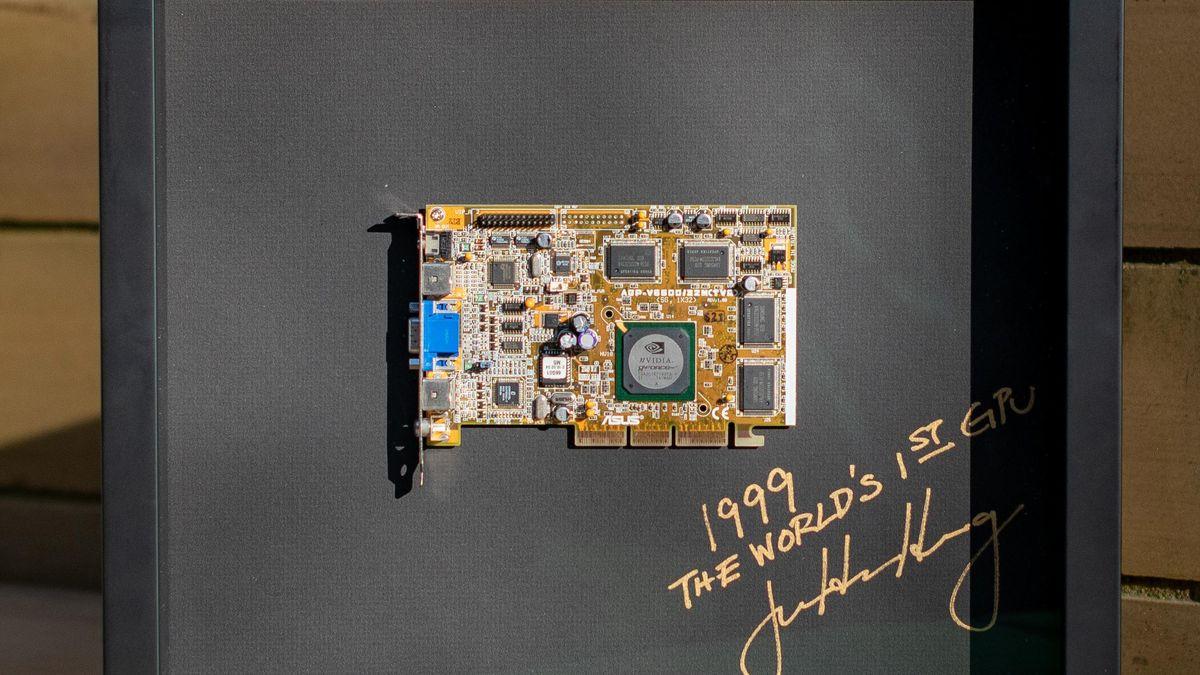
在发布会的巨幅海报与新闻通稿上,黄仁勋拒绝再使用“图形加速芯片”这个陈旧的词汇。他用加粗的大写字母,向人类科技史正式定义了那个在未来二十七年里重塑大国博弈与文明进程的缩写词:
On the giant posters and in the press releases, Huang refused ever again to use the stale phrase "graphics acceleration chip." In bold capital letters he formally inscribed into the history of human technology the acronym that would reshape great-power rivalry and the course of civilization for the next twenty-seven years:
GPU——Graphics Processing Unit(图形处理器)。
GPU — Graphics Processing Unit.
这是一次天才般的商业命名与技术篡权。在指甲盖大小的0.22微米台积电硅片上,GeForce 256集成了两千三百万个晶体管——这个数字甚至超越了同期英特尔最顶级的奔腾III(Pentium III)CPU!当玩家运行《雷神之锤3:竞技场》时,CPU终于从繁重的三维几何计算中被解放出来,画面帧率呈几何级数飙升。从此,在每一台现代计算机的主板上,形成了“CPU管逻辑、GPU管并行图形”的双核王权时代。
It was a stroke of genius in commercial naming and a coup of technological usurpation. On a piece of TSMC silicon no bigger than a fingernail, etched at 0.22 microns, GeForce 256 packed twenty-three million transistors — a figure that even surpassed Intel's mightiest CPU of the same era, the Pentium III. When gamers ran Quake III Arena, the CPU was at last liberated from the heavy labor of three-dimensional geometry, and frame rates soared by geometric leaps. From then on, the motherboard of every modern computer carried a dual monarchy: the CPU reigning over logic, the GPU reigning over parallel graphics.
GeForce 256的横空出世,成了压垮昔日霸主们最后的丧钟。
The thunderous arrival of GeForce 256 tolled the last, crushing knell for the overlords of the old era.
短短一年多时间里,曾经在九十年代叱咤风云的三十多家三维图形公司像多米诺骨牌一样成片倒塌:S3 Graphics卖身退出,帝盟与STB分崩离析,连巨头英特尔试水独立显卡的i740项目也在碰了一鼻子灰后草草收场。
In little more than a year, the thirty-odd three-dimensional graphics companies that had strutted across the nineties toppled like rows of dominoes: S3 Graphics sold itself off and quit the field, Diamond Multimedia and STB fell to pieces, and even the giant Intel's i740 foray into standalone graphics, after smashing its nose full square, wound up in a hasty, dusty retreat.
最戏剧性的终局,落在了头号宿敌3dfx身上。
The most dramatic finale of all fell upon the arch-rival of them all: 3dfx.
这家曾在三年前让黄仁勋夜不能寐的硅谷贵族,在英伟达“每六个月一代芯片”的加特林机枪扫射下彻底失血枯竭。2000年12月15日,走投无路的3dfx宣布破产解散,不得不签下一纸屈辱的城下之盟——以七千万美元现金加一百万股股票的价格,将自己全部的核心专利、品牌资产与顶尖工程师团队,打包卖给了昔日最看不起的追赶者英伟达。
This Silicon Valley aristocrat, the one that had kept Huang awake at night three years earlier, had bled itself dry under the Gatling-gun barrage of NVIDIA's "a new chip every six months." On December 15, 2000, with its back to the wall, 3dfx declared bankruptcy and dissolution, forced to sign, beneath the victor's walls, a humiliating pact — selling its entire trove of core patents, brand assets, and elite engineering talent to NVIDIA, the pursuer it had most disdained, for $70 million in cash plus one million shares.
收购协议签署后,大批高傲的3dfx工程师怀着战败者的怨气走进圣克拉拉园区。按照硅谷常规的并购剧本,胜利者通常会对旧部进行清洗或边缘化;但黄仁勋干了一件极具统帅格局的事:他亲自出面安抚这群曾把自己逼到绝境的死敌,不仅保留了他们的核心研发建制,还将3dfx最顶尖的芯片架构师直接吸纳进英伟达的核心决策层。“在战场上我恨不得掐死你们,”黄仁勋在欢迎会上笑着对他们说,“但现在,你们是全硅谷最懂图形的战士,去帮我造下一把更锋利的剑。”(这批前3dfx骨干,后来恰恰成了英伟达研发划时代架构GeForce 8800的中流砥柱。)
After the acquisition was signed, swarms of proud 3dfx engineers walked into the Santa Clara campus carrying the resentment of the defeated. By the conventional Silicon Valley script for mergers, the victor purges or sidelines the old guard; Huang instead did something of a true commander's stature: he came out in person to soothe the band of mortal enemies who had once driven him to the brink, not only preserving their core research organization but lifting 3dfx's finest chip architects straight into NVIDIA's inner circle of decision-making. "On the battlefield I could have strangled you with my own hands," Huang told them with a smile at the welcome gathering, "but now you are the warriors who understand graphics better than anyone in Silicon Valley. Go and build me the next, sharper sword." (Those former 3dfx stalwarts would become, precisely, the backbone of the team that created NVIDIA's epoch-making GeForce 8800 architecture.)
同年春天,另一场更为惊心动魄的豪赌从西雅图砸向了黄仁勋的办公桌。
That same spring, an even more breathtaking gamble came crashing down onto Huang's desk from Seattle.
为了阻击索尼即将发布的怪兽级主机PlayStation 2,比尔·盖茨亲自拍板,决定由微软斥资数十亿美元打造第一代家用游戏主机——Xbox。在最初的芯片竞标中,老谋深算的AMD几乎已经把订单收入囊中,甚至连联合新闻稿都准备好了。但在最后一刻,黄仁勋带着尚未完全定型的GeForce下一代架构图纸杀进西雅图,凭借碾压级的三维图形指标,在发布会前夕硬生生从AMD嘴里虎口夺食,抢下了价值数亿美元的Xbox定制GPU(NV2A)与南桥芯片订单!
To block Sony's monster console, the PlayStation 2, that was about to be unleashed, Bill Gates gave the order in person: Microsoft would spend billions of dollars to build its first home game console — the Xbox. In the early chip bidding, the wily old AMD had all but pocketed the order; even the joint press release had been drafted. But at the last moment Huang stormed into Seattle carrying blueprints for GeForce's next-generation architecture that were not yet fully frozen, and on the eve of the announcement, on the sheer weight of crushing three-dimensional graphics numbers, he tore the Xbox custom GPU (NV2A) and southbridge orders — worth hundreds of millions of dollars — straight out of AMD's jaws.
2000年底至2001年,英伟达风光无两:它不仅拿下了两亿美元的微软预付款,被纳入标普500指数(取代了声名狼藉的安然公司Enron),股价更是逆着互联网泡沫破裂的寒流一路狂飙,在2001年底突破了每股100美元(拆股前口径)的里程碑。
From the end of 2000 into 2001, NVIDIA stood in the full glare of glory: it collected a $200 million advance from Microsoft, was added to the S&P 500 index (replacing the notorious Enron), and its share price, running straight against the chill wind of the bursting dot-com bubble, rocketed past the milestone of $100 a share (pre-split figures) by the end of 2001.
正是那一次庆功大会上,黄仁勋留下了硅谷历史上最著名的个人印记之一。
It was at that victory celebration that Huang left one of the most famous personal marks in Silicon Valley history.
此前在一次内部动员会上,为了激励销售与研发团队冲击不可能的目标,微醺的黄仁勋曾拍着胸脯和员工打赌:“如果有一天我们的股价能冲破100美元,大家想让我干什么都行!”员工们起哄高喊:“去纹身!把公司的Logo纹在身上!”
Earlier, at an internal rally, to spur the sales and engineering teams toward an impossible target, a slightly tipsy Huang had slapped his chest and wagered with the staff: "If one day our share price breaks through $100, I'll do whatever you want!" The employees hooted back: "Get a tattoo! Put the company logo on your body!"
当股价真的撞线100美元那天,三十八岁的黄仁勋没有耍赖。他在儿女的陪同下走进一家纹身店,脱掉上衣,让纹身师用细密的钢针将英伟达那只旋转的“绿色恶魔之眼”Logo,一针一针刺进了自己左肩的三角肌皮肤里。
The day the share price really struck the $100 line, thirty-eight-year-old Huang did not welch. Accompanied by his son and daughter, he walked into a tattoo parlor, took off his shirt, and let the artist drive NVIDIA's spinning "green eye of the devil" logo, needle by needle, into the deltoid of his left shoulder.
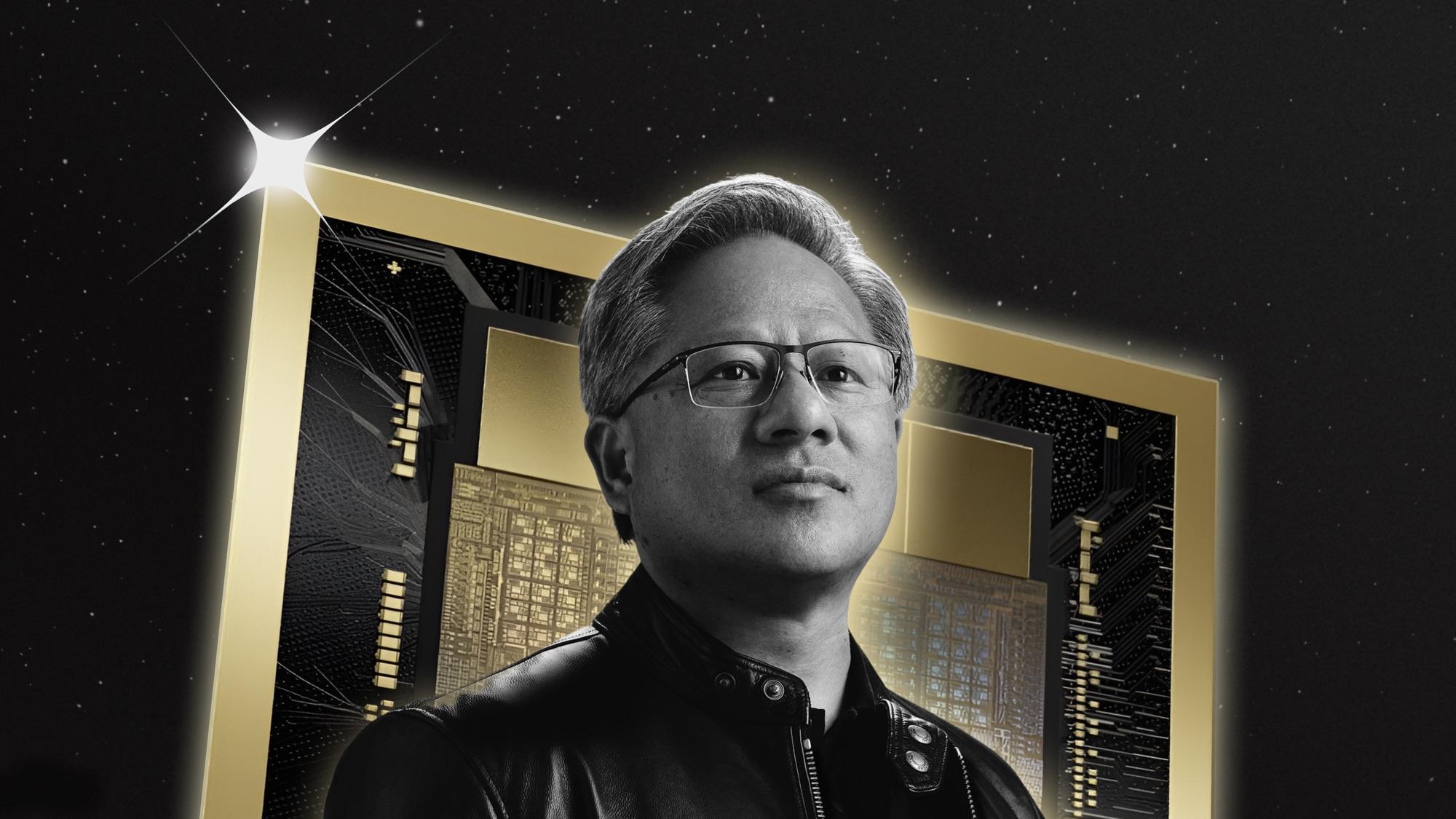
针头刺破皮肉的剧痛超出了这位铁血CEO的想象。事后他在访谈中毫不讳饰地承认:“我当时疼得像个婴儿一样哗哗流眼泪(cried like a baby),如果早知道纹身这么疼,我打死也不会许那个愿。”也正是在那场带着泪水与欢笑的庆典前后,妻子洛丽觉得丈夫成天穿宽大的Polo衫和皱巴巴的衬衫缺乏统帅气场,便去商场为他挑选了第一件剪裁利落的黑色皮夹克。那时的两人都不会想到,左肩皮肉下的那枚印记与身上那层黑色的皮革,将在未来二十五年里长成他身体的一部分,成为全球科技界最极具辨识度的权力图腾。
The pain of the needle tearing through skin exceeded even this iron-blooded CEO's imagination. He later admitted in an interview, without the least embellishment: "I cried like a baby. If I had known a tattoo hurt that much, nothing on earth would have made me make that promise." And it was around that celebration of tears and laughter that his wife Lori, feeling that the roomy polo shirts and crumpled dress shirts her husband wore every day lacked the presence of a commander, went to a shopping mall and picked out for him his first sharply tailored black leather jacket. Neither of them could have imagined then that the mark beneath the skin of his left shoulder and that layer of black leather would grow, over the next twenty-five years, into parts of his very body — the most instantly recognizable power totem in the global technology world.
然而,在商业世界里,所有命运馈赠的蜜糖,背面都标好了残酷的代价。
Yet in the world of commerce, every spoonful of honey that fate bestows has a brutal price written on its underside.
微软的Xbox订单很快从蜜月演变成了一场折磨彼此的血腥拉锯战。微软的谈判团队以冷酷霸道著称:随着索尼PS2发动惨烈的价格战,微软硬件部门亏损严重,便转过头逼迫芯片供应商英伟达大幅下调NV2A芯片的供货单价;而黄仁勋同样寸步不让——因为Xbox芯片占用了英伟达最顶尖的工程团队与台积电产能,他绝不允许微软压榨英伟达的毛利率。
Microsoft's Xbox order soon curdled from honeymoon into a bloody war of attrition that tortured both sides. Microsoft's negotiating team was famed for cold, overbearing hardball: as Sony's PS2 launched a ferocious price war and Microsoft's hardware division bled red ink, the company turned around and pressed its chip supplier to slash the unit price of the NV2A by a wide margin; Huang yielded not an inch in return — because the Xbox chips occupied NVIDIA's finest engineering talent and TSMC's production capacity, he would never allow Microsoft to squeeze NVIDIA's margins.
双方最终闹到了对簿公堂、提交仲裁的决裂边缘(直到2003年初才勉强达成降价和解,但梁子已彻底结下,微软愤怒地在下一代主机Xbox 360上转投了英伟达的死敌——加拿大图形巨头ATI)。
The dispute finally climbed to the brink of open rupture, headed for the courts and arbitration. (A price-cut settlement was barely reached in early 2003, but the feud had set for good: a furious Microsoft turned, for its next console, the Xbox 360, to NVIDIA's mortal enemy — the Canadian graphics giant ATI.)
屋漏偏逢连夜雨。就在与微软撕破脸的2002年至2003年间,英伟达迎来了上市后的第一次全面至暗低谷:
It rained on the leaking roof. In 2002 and 2003, just as the fight with Microsoft boiled over, NVIDIA ran into the first full-scale dark valley of its life as a public company:
- 资本与监管危机: 美国证监会(SEC)突然对英伟达发起财务会计调查,公司被迫重述过往几个季度的财报,首席财务官黯然离职,连昔日的联合创始人柯蒂斯·普里姆也在2003年彻底告别英伟达,隐居山林;华尔街信心崩盘,英伟达股价从高点惨烈暴跌超过百分之八十,市值缩水回几亿美元的泥潭。
- The capital and regulatory crisis: the U.S. Securities and Exchange Commission (SEC) abruptly opened a financial-accounting investigation into NVIDIA; the company was forced to restate several past quarters of earnings, the chief financial officer resigned in gloom, and even the old co-founder Curtis Priem bade NVIDIA a final farewell in 2003 and withdrew into mountain seclusion; Wall Street's confidence collapsed, NVIDIA's share price plunged catastrophically by more than eighty percent from its peak, and market value shrank back into the mire of a few hundred million dollars.
- 产品线的奇耻大辱(NV30灾难): 因为最精锐的骨干被抽调去救火微软Xbox项目,加上过于激进地押注台积电尚未成熟的0.13微米铜互连工艺,英伟达在2003年初端出的旗舰显卡GeForce FX 5800(代号NV30)遭遇了毁灭性的翻车。它的功耗和发热量失控到必须在显卡上安装一个巨大的涡轮鼓风机,开机时发出如同吹风机和吸尘器般的刺耳咆哮,被全世界玩家做成了恶搞视频疯狂群嘲;而在性能上,它被老对手ATI趁机推出的神作Radeon 9700 Pro按在地上体无完肤地摩擦,市场份额瞬间雪崩。
- The ignominy of the product line (the NV30 disaster): with the most elite backbone engineers pulled away to fight the fires of Microsoft's Xbox project, and with an over-aggressive wager on TSMC's still-immature 0.13-micron copper-interconnect process, NVIDIA's flagship GeForce FX 5800 (code-named NV30), served up in early 2003, met a devastating crash. Its power draw and heat ran so far out of control that the card had to carry an enormous turbine blower, shrieking on startup like a hair dryer fused with a vacuum cleaner, and gamers worldwide turned it into spoof videos and jeered in packs; on performance it was rubbed face-down into the dirt by the masterpiece Radeon 9700 Pro that the old rival ATI pushed out at just that moment, and its market share avalanched on the spot.
四十岁的黄仁勋站在圣克拉拉总部的演示厅里,看着玩家们制作的那段嘲讽GeForce FX是“工业吹风机”的恶搞短片。
Forty-year-old Huang stood in the demo hall of the Santa Clara headquarters, watching the spoof reel the players had cut, mocking the GeForce FX as an "industrial hair dryer."
换作任何一位爱惜羽毛的上市公司CEO,大概会恼羞成怒地让公关部去删帖封杀;但黄仁勋看了一遍又一遍,非但没有发火,反而在全员大会上当着上千名员工的面,把这段耻辱的恶搞视频完整播放了出来。
Any other CEO of a public company who prized his feathers would most likely have flown into a rage and ordered public relations to scrub the post and gag the mockery; but Huang watched it again and again, and far from losing his temper, at an all-hands meeting, before more than a thousand employees, he played the humiliating spoof from beginning to end.
“看着它,笑出来,然后把这份羞耻记在骨头里,”黄仁勋冷冷地扫视全场,“玩家嘲笑我们,是因为我们确实造出了一坨垃圾。我们再也不要依赖任何单一的大客户(指微软主机),再也不要在工艺和架构上同时赌命!”
"Watch it. Laugh at it. Then carve this shame into your bones," Huang said, sweeping the room with a cold gaze. "The players laugh at us because we truly did build a piece of junk. We will never again depend on any single big customer — I mean the Microsoft console — and never again stake our lives on process and architecture at the same time!"
知耻而后勇的反扑快得令人窒息。仅仅一年后的2004年,全面重构管线的GeForce 6800王者归来,一举夺回全球性能皇冠;到了2006年AMD斥资五十四亿美元吞并ATI时,英伟达已经牢牢坐稳了全球独立显卡市场无可争议的头把交椅。
The counterattack born of shame came with suffocating speed. A mere year later, in 2004, the fully rebuilt GeForce 6800 returned as king and seized back the global performance crown; and by 2006, when AMD paid $5.4 billion to swallow ATI, NVIDIA already sat unshakably in the undisputed seat at the very head of the world's standalone-graphics table.
站在2005年底的山巅向下俯瞰,四十二岁的黄仁勋似乎已经赢得了一切:年营收突破二十亿美元,宿敌或死或残,账上躺着厚厚的现金储备。按照正常的商业剧本,此时的英伟达只需要像可口可乐或吉列剃须刀一样,每年按部就班地给全世界游戏玩家升级一下显卡画质,就能躺着数钱直到永远。
Looking down from the summit at the end of 2005, forty-two-year-old Huang appeared to have won everything: annual revenue had broken $2 billion, the old enemies were dead or crippled, and thick cash reserves lay in the vault. By the normal commercial script, all NVIDIA needed to do now was what Coca-Cola or Gillette razors did — upgrade the world's gamers' picture quality, year after year, on schedule — and it could lie back and count its money until the end of time.
但黄仁勋体内那个曾在曼谷点燃泳池、在肯塔基走过烂吊桥的赌徒灵魂,却在这一刻感到了深入骨髓的焦虑。
But the gambler's soul inside Huang — the one that had once set a swimming pool alight in Bangkok and crossed the rotting footbridge in Kentucky — felt, at this very moment, an anxiety sunk deep into the marrow.
他敏锐地看到了一块压在所有图形公司头顶的天花板:全世界真正愿意花几百美元买高端显卡打游戏的硬核玩家,满打满算也就几千万人。 如果GPU一辈子只能用来画《魔兽世界》里的兽人盔甲和爆炸火花,英伟达永远只能是一家二流的“玩具配件厂”,一旦未来英特尔把图形功能直接集成进CPU里,英伟达依然难逃慢性死亡的宿命。
He saw, with sharp clarity, the ceiling pressing down on the head of every graphics company alive: the hardcore players in the whole world truly willing to spend several hundred dollars on a high-end graphics card for gaming numbered, at the most generous count, a few tens of millions of people. If the GPU spent its whole life drawing orc armor and explosion sparks in World of Warcraft, NVIDIA would forever remain a second-rate "toy-parts factory," and the day Intel folded graphics directly into the CPU, NVIDIA would still not escape the doom of a slow, lingering death.
就在这时,斯坦福大学实验室里一个留着书卷气的年轻博士生,敲响了圣克拉拉的大门。他带来了一个在当时所有华尔街分析师看来都荒谬透顶的疯狂念头:既然GPU每秒钟能同时计算几百万个像素点的颜色,那我们能不能骗过这颗芯片,让它不要画图,而是去算流体力学、算石油勘探、算华尔街的期权定价,甚至……去模拟人类的大脑?
Just then, a bookish young doctoral student in a Stanford University laboratory knocked on Santa Clara's door. He carried a mad idea that looked absurd beyond belief to every Wall Street analyst alive: since the GPU can compute the colors of millions of pixels simultaneously every second, could we not trick this chip — make it stop painting pictures, and instead compute fluid dynamics, compute seismic surveys for oil, compute option pricing on Wall Street, even... simulate the human brain?
一场耗资百亿美元、被华尔街唾骂了整整六年、险些让黄仁勋被投资人赶下台的世纪豪赌——CUDA,即将在一片质疑声中拉开帷幕。
A $10-billion gamble of the century — one Wall Street would curse for six full years, one that nearly saw Huang driven from his chair by his own investors — CUDA, was about to raise its curtain amid a storm of doubt.