第十章:被华尔街唾弃的疯狂赌局——CUDA(2006—2011)
Chapter Ten: The Mad Gamble Despised by Wall Street — CUDA (2006–2011)
在距离英伟达圣克拉拉总部向北二十分钟车程的斯坦福大学盖茨计算机科学大楼里,一场静悄悄的“黑客越狱”正在上演。
Twenty minutes' drive north of NVIDIA's Santa Clara headquarters, inside Stanford University's Gates Computer Science Building, a silent "hacker's jailbreak" was unfolding.
2000年代初,斯坦福图形学实验室的博士生伊恩·巴克(Ian Buck)正在鼓捣一面由三十二张英伟达GeForce显卡拼装而成的简陋视频墙。像所有穷得叮当响却又渴望超级算力的学院派极客一样,巴克盯上了游戏显卡里那股未被驯服的洪荒之力:当时一颗顶级的英特尔奔腾CPU,就像一位博学多才的大学教授,擅长按先后顺序处理极其复杂的逻辑推理,但一次只能做一两件事;而一张几百美元的英伟达GPU,则像是由成百上千名小学生组成的方阵——单个小学生只会做最简单的加减乘除,但当他们同时动笔时,每秒钟能完成的浮点运算次数(FLOPS)足以把顶级CPU远远甩在身后。
In the early 2000s, Ian Buck, a doctoral student in Stanford's graphics laboratory, was tinkering with a crude video wall assembled from thirty-two NVIDIA GeForce cards. Like every academic geek who was penniless yet starved for supercomputing power, Buck had fixed his eye on the untamed primal force sleeping inside gaming graphics cards: a top Intel Pentium CPU of the day was like a learned, versatile university professor, superb at working through immensely complex logical reasoning strictly in turn, but able to do only one or two things at a time; a few-hundred-dollar NVIDIA GPU, by contrast, was a square formation of hundreds upon hundreds of schoolchildren — each single schoolchild capable only of the simplest arithmetic, yet when they all put pen to paper at once, the floating-point operations per second they completed left the finest CPU far, far behind.
“能不能骗过显卡,让它别画怪兽和爆炸,而是去算矩阵乘法和科学方程?”
"Could we trick the graphics card — stop it drawing monsters and explosions, and make it multiply matrices and solve scientific equations instead?"
在当时,这简直是一场自虐式的折磨。因为GPU的底层电路完全是为图形渲染焊死的,科学家们如果想用显卡算一道流体力学公式,必须先把数学数据伪装成“三维物体的顶点坐标”和“像素皮肤纹理”塞进显卡,骗显卡渲染出一幅花花绿绿的怪异图像,然后再从每个像素点的红绿蓝(RGB)颜色数值里,反向破译出计算结果。
At the time, this was sheer self-torture. The GPU's underlying circuitry was welded shut entirely for graphics rendering; a scientist who wanted the card to evaluate one fluid-dynamics formula first had to disguise the mathematical data as "vertex coordinates of three-dimensional objects" and "pixel skin textures," stuff them into the card, trick it into rendering a garishly colored freak of an image, and only then reverse-decode the computational results from the red-green-blue (RGB) color values of every single pixel.
为了终结这种荒谬的伪装,伊恩·巴克在美国国防部高级研究计划局(DARPA)的少量经费资助下,用C语言写出了一个名为Brook的开源流式编程工具——它第一次试图扯掉图形学的画皮,让程序员能够直接调用GPU的并行算力。
To end this absurd masquerade, Ian Buck — on the modest funding of the U.S. Defense Advanced Research Projects Agency (DARPA) — wrote, in the C language, an open-source streaming-programming tool called Brook: the first attempt to tear off graphics' painted skin and let programmers call directly upon the GPU's parallel muscle.
这个在学术圈小范围流传的怪诞项目,立刻触动了英伟达首席科学家大卫·柯克(David Kirk)敏锐的神经,并被第一时间摆上了黄仁勋的办公桌。
This grotesque little project, circulating only within a small corner of academe, instantly plucked at the keen nerves of NVIDIA's chief scientist David Kirk, and was laid on Huang's desk without a moment's delay.
2004年,刚从斯坦福拿到博士学位的伊恩·巴克,接到了黄仁勋亲自发出的入职邀请。在圣克拉拉的会议室里,四十一岁的黄仁勋盯着这个略显腼腆的年轻人,说出了一句改写二十一世纪科技史的话:“伊恩,别在学校里小打小闹了。来英伟达,我给你整个公司的硬件架构团队,我们把你的Brook真正嵌进每一颗硅片的骨头里。”
In 2004, Ian Buck, freshly doctored at Stanford, received a job invitation issued by Huang in person. In a Santa Clara conference room, forty-one-year-old Huang fixed his eyes on this slightly shy young man and spoke the sentence that would rewrite the technological history of the twenty-first century: "Ian, stop playing small games at school. Come to NVIDIA. I will give you the hardware architecture team of the entire company, and we will embed your Brook into the bones of every single chip."
巴克入职后,这项高度机密的软硬件协同工程被正式命名为:CUDA(Compute Unified Device Architecture,统一计算设备架构)。
After Buck came aboard, this top-secret co-engineering of hardware and software was formally christened: CUDA (Compute Unified Device Architecture).
但如果仅仅是开发一套软件工具包、再顺手卖几张昂贵的专业计算卡给科研院所,黄仁勋充其量只是一个精明的商人。真正将他推向“疯子远见者”神坛——并在随后六年里差点让他被华尔街生吞活剥的——是他于2006年拍板的一项“全员强制绑定”战略。
But had it stopped at developing a software toolkit and, on the side, selling a few expensive professional computing cards to research institutes, Huang would at most have been a shrewd merchant. What truly thrust him onto the altar of the "mad visionary" — and, over the six years that followed, nearly got him devoured alive by Wall Street — was the "everyone in, mandatorily bound" strategy he decreed in 2006.
2006年11月,耗时四年、斥资近五亿美元研发的划时代旗舰芯片G80(GeForce 8800 GTX)横空出世。在这颗集成了六点八亿个晶体管的庞然大物里,黄仁勋和大卫·柯克、马拉科夫斯基彻底推翻了沿用十年的图形管线,将其全部重构为统一的通用流处理器(Streaming Processors)。
In November 2006, after four years of labor and nearly $500 million of R&D, the epoch-making flagship chip G80 (GeForce 8800 GTX) burst into the world. Inside this colossus carrying 680 million transistors, Huang, together with David Kirk and Malachowsky, demolished the graphics pipeline that had stood for a decade and rebuilt it, whole, as a unified array of general-purpose streaming processors.
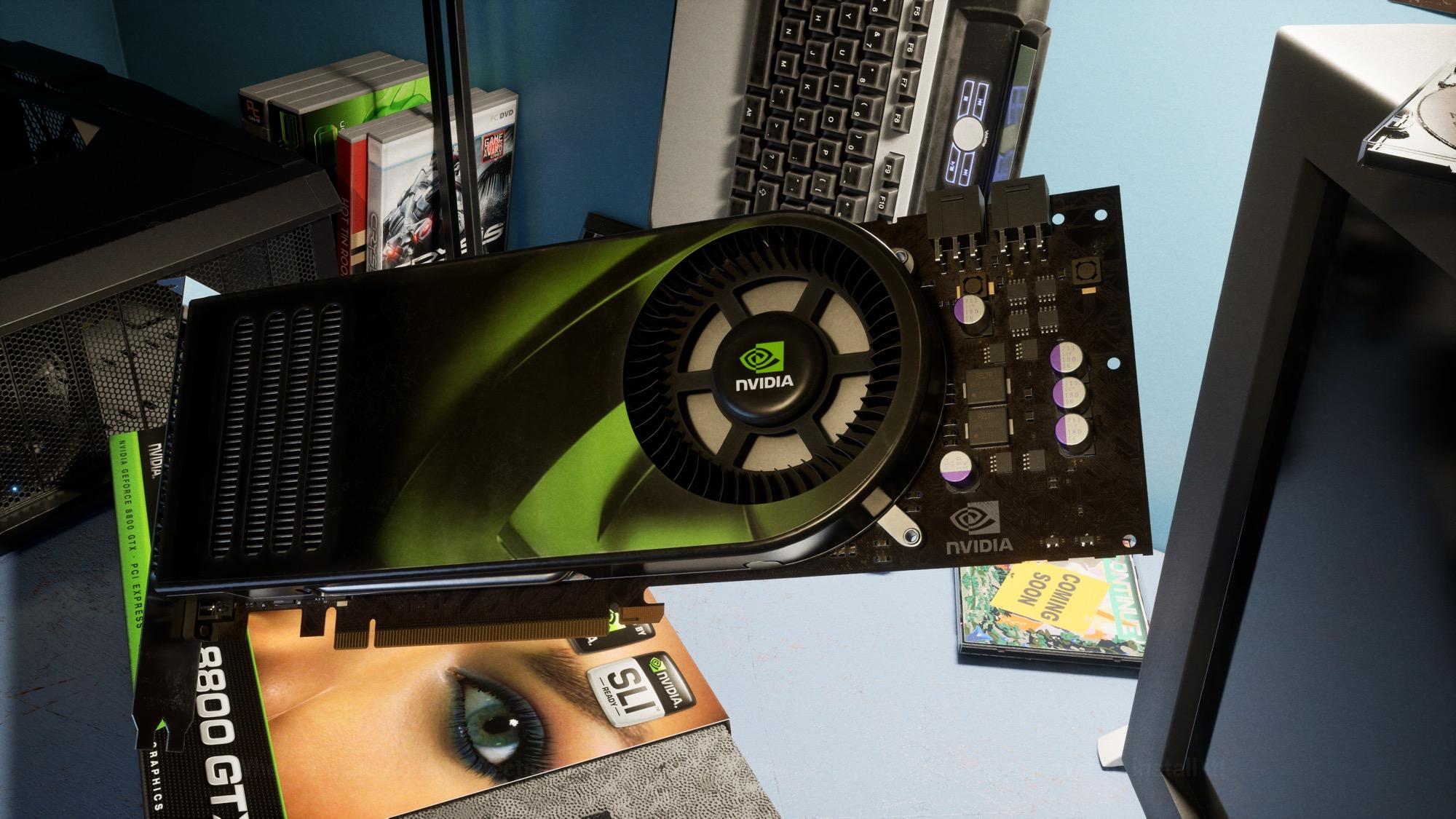
更令内部财务官和外部董事会倒吸一口凉气的是,黄仁勋下达了一条死命令:不仅上千美元的专业卡要有CUDA,从今天起,英伟达卖给全世界普通游戏玩家的每一张GeForce消费级显卡——哪怕是网吧里少年买来打《魔兽世界》和《反恐精英》的百元甜品卡——都必须在物理硅片上塞进全套CUDA通用计算逻辑电路!
What made the internal finance officers and the outside board members draw a collective cold breath, though, was the death sentence Huang handed down: not only must the thousand-dollar professional cards carry CUDA — from this day forward, every GeForce consumer graphics card NVIDIA sold to ordinary gamers the world over, down to the hundred-dollar budget card a teenager bought in an internet cafe to play World of Warcraft and Counter-Strike, had to have the complete set of CUDA general-computing logic circuitry stuffed into its physical silicon!
工程与财务团队拿着成本测算表冲进黄仁勋的办公室,声音都在发抖:塞进CUDA硬件逻辑和额外的寄存器缓存,意味着每一颗芯片的裸片面积(Die Size)要凭空膨胀百分之十五到二十!在台积电按晶圆面积计价的铁律下,这意味着单颗芯片制造成本暴涨、晶圆切割良率下降、显卡功耗飙升——而全世界99.9%的游戏玩家买显卡只看《孤岛危机》能跑多少帧,根本没人愿意为这个见鬼的“科学计算功能”多掏一分钱!
The engineering and finance teams stormed into Huang's office clutching their cost spreadsheets, their voices trembling: packing in the CUDA hardware logic and the extra register cache meant that the die size of every chip would swell fifteen to twenty percent out of thin air! Under TSMC's iron law of charging by wafer area, this meant per-chip manufacturing costs surging, wafer-dicing yields falling, graphics-card power consumption soaring — while 99.9 percent of the world's gamers bought a card for one thing only, how many frames Crysis could run, and not a soul would pay one extra cent for this damned "scientific computing feature"!
这是一个经典的硅谷“鸡生蛋还是蛋生鸡”死局:没有海量硬件装机量,就没有程序员愿意花心血学CUDA写软件;而没有杀手级软件应用,买硬件的人就觉得你在卖一堆无用的废硅片。
This was the classic Silicon Valley deadlock of the chicken and the egg: without oceans of installed hardware, no programmer would spend heart's blood learning CUDA and writing software; and without a killer software application, the people buying hardware would conclude you were selling heaps of useless dead silicon.
黄仁勋用最霸道的方式劈开了这个死结:由英伟达自己流血买单,强行把“蛋”铺满全世界!
Huang split the knot in the most domineering way imaginable: NVIDIA would bleed and pay the bill itself, forcibly paving the "egg" across the entire world!
“如果我们只把CUDA放在一年卖几万张的昂贵专业卡上,它永远只是象牙塔里的玩具,”黄仁勋在董事会上力排众议,眼神狂热而冷峻,“但如果我们每年卖出五千万张、一亿张GeForce游戏卡,哪怕上面都带着CUDA,不出五年,全世界的每一间大学宿舍、每一座实验室里都会躺着一台现成的超级计算机!当那一天到来时,软件自然会长出来!”
"If we confine CUDA to the expensive professional cards that sell a few tens of thousands a year, it remains forever a toy inside the ivory tower," Huang argued the whole board down, his eyes feverish and glacial at once. "But if we sell fifty million, a hundred million GeForce gaming cards a year, every one of them carrying CUDA, then within five years a ready-made supercomputer will be lying in every university dormitory, in every laboratory on earth! When that day comes, the software will grow of its own accord!"
然而,商业世界从来不会给先知颁发免死金牌。当一个赌徒把全部筹码推向桌心时,命运往往会先翻出最残酷的底牌。
Yet the commercial world has never issued prophets a medal of immunity from death. When a gambler shoves every chip he owns to the center of the table, fate tends to turn over its cruelest hole card first.
从2007年到2011年,整整五年时间,黄仁勋为这场“零亿美元市场”的豪赌付出了惨烈到几乎窒息的代价。
From 2007 to 2011 — five full years — Huang paid for the gamble on this "zero-billion-dollar market" a price so brutal it nearly stopped the breath.
每年,英伟达都要从游戏显卡辛辛苦苦赚来的利润里,抽调数亿乃至十数亿美元的真金白银,填进CUDA这个看不见底的黑洞:伊恩·巴克率领着数百名顶尖系统软件工程师,不计成本地重写底层编译器、开发数学加速库(cuBLAS、cuFFT);黄仁勋派出布道师团队跑遍全球几百所顶尖高校,免费送显卡、编教材、资助教授开设并行计算课程。
Every year, out of the profits laboriously earned by its gaming cards, NVIDIA skimmed off hundreds of millions — at times more than a billion — dollars of genuine cash and poured it into the fathomless black hole of CUDA: Ian Buck led several hundred top system-software engineers in rewriting the low-level compilers and building the mathematical acceleration libraries (cuBLAS, cuFFT) regardless of cost; Huang dispatched evangelist teams across several hundred leading universities the world over, giving away graphics cards, compiling textbooks, funding professors to open courses in parallel computing.
而市场回馈给他的,却是一片死寂般的冰冷。除了华尔街少数高频交易机构拿去算期权模型、休斯敦的石油公司拿去分析海底地震波、以及几家医学院拿去加速CT影像重建之外,整个主流科技界对CUDA无动于衷。一年下来,真正冲着CUDA买单的客户屈指可数。
And the market's answer back was a coldness like the grave. Beyond a handful of Wall Street high-frequency trading houses running option models, Houston's oil companies analyzing seabed seismic waves, and a few medical schools accelerating CT image reconstruction, the entire mainstream technology world was unmoved by CUDA. In a whole year, the customers who came to buy because of CUDA could be counted on the fingers of one hand.
华尔街彻底愤怒了。
Wall Street finally lost its temper altogether.
在每个季度的财报电话会议上,摩根士丹利、高盛与花旗的半导体分析师们轮番向黄仁勋开炮。在他们精明的Excel财务模型里,英伟达本该拥有50%以上的丰厚毛利率,却因为黄仁勋一意孤行在每一颗游戏芯片里塞进冗余的CUDA晶体管,硬生生把毛利率拖低到了35%至40%的泥潭,而宿敌AMD(已吞并ATI)推出的精简小核心显卡HD 4800系列,正凭借极高的面积性价比疯狂蚕食英伟达的市场份额!
On every quarterly earnings call, the semiconductor analysts of Morgan Stanley, Goldman Sachs, and Citibank took turns firing at Huang. In their razor-sharp Excel models, NVIDIA ought to have enjoyed lush gross margins above 50 percent; instead, because Huang had ridden his own hobby-horse and stuffed redundant CUDA transistors into every last gaming chip, the margins had been dragged bodily into the mire of 35 to 40 percent — while the arch-rival AMD (having swallowed ATI) was pushing out its pared-down, small-core HD 4800-series cards, which on brutally high value per square millimeter were devouring NVIDIA's market share at a mad pace!
就在华尔街的唾沫星子快要把圣克拉拉淹没时,2008年夏天,两场真正的灭顶天灾同时砸了下来。
Just as Wall Street's spittle came within a hair of drowning Santa Clara, in the summer of 2008 two true deluges of heaven fell at once.
第一重暴击,是英伟达成立以来最耻辱的产品质量雪崩——震惊业界的“显卡门”(Bumpgate)。
The first hammer blow was the most humiliating product-quality avalanche in NVIDIA's history — the "Bumpgate" that stunned the industry.
由于在笔记本移动显卡芯片封装中采用的底部填充材料与高铅焊料凸点(Solder Bumps)热膨胀系数不匹配,在笔记本电脑反复开关机的冷热循环下,芯片内部微小的焊点纷纷脆裂脱焊。一时间,苹果MacBook Pro、戴尔与惠普的数百万台高端笔记本电脑大规模出现黑屏、花屏乃至彻底报废!消费者集体诉讼蜂拥而至,苹果与惠普震怒索赔,英伟达被迫在一个季度内一次性计提了近两亿美元的巨额返修与赔偿拨备(最终总损失高达四五亿美元),声誉跌至冰点。
Because the underfill material and the high-lead solder bumps used in the packaging of NVIDIA's notebook mobile graphics chips had mismatched coefficients of thermal expansion, the microscopic solder joints inside the chips cracked and lifted one after another under the hot-and-cold cycling of laptops switched on and off again and again. Overnight, millions of high-end laptops — Apple MacBook Pros, Dells, and HPs — suffered black screens, garbled displays, even outright death. Consumer class actions swarmed in, Apple and HP raged and claimed damages, and NVIDIA was forced, within a single quarter, to book nearly $200 million of massive repair-and-compensation provisions (ultimate losses ran as high as four to five hundred million dollars), while its reputation fell to freezing point.
紧接着两个月后,2008年9月,雷曼兄弟倒闭,百年一遇的全球金融海啸全面爆发。
Two months later, in September 2008, Lehman Brothers collapsed, and a once-in-a-century global financial tsunami broke out in full.

PC消费市场瞬间冰封,叠加“显卡门”丑闻、英特尔发起的芯片组专利诉讼围剿,以及CUDA无底洞般的烧钱拖累,英伟达的股价在2008年底上演了自由落体式的崩盘——从前一年近40美元的高位一路狂泻至不足6美元,市值在短短一年内惨烈蒸发超过百分之八十,重新缩水成一家市值仅三十多亿美元的落魄中型公司!
The consumer PC market froze solid in an instant; layered atop the Bumpgate scandal, Intel's besieging chipset patent lawsuits, and CUDA's bottomless-pit burn, NVIDIA's share price staged a free fall into the end of 2008 — plunging from a high of nearly $40 the year before to below $6, its market value violently evaporating by more than eighty percent within a single year, shrinking once more into a down-at-heel mid-sized company worth barely more than $3 billion!
那段日子里,圣克拉拉园区的气氛压抑得让人喘不过气来。过去意气风发的工程师们手里的股票期权全部沦为一文不值的“水下废纸(Underwater Options)”。激进的对冲基金与机构股东私下串联,要求董事会立刻砍掉烧钱的CUDA部门,甚至有人公开讨论:“四十五岁的黄仁勋是不是已经江郎才尽,该让位给一位懂得削减成本的职业经理人了?”
In those days the air on the Santa Clara campus was too thick to breathe. The stock options that had once made the engineers swagger had all sunk into worthless "underwater paper." Activist hedge funds and institutional shareholders caucused in private, demanding the board cut off the money-burning CUDA department at once; some even discussed it in the open: "Is the forty-five-year-old Jensen Huang already played out, and should the seat go to a professional manager who knows how to cut costs?"
连黄仁勋在英伟达内部最坚定的盟友们,心里也开始打鼓:如果五年、十年后依然没人用GPU做通用计算,公司会不会在黎明到来前就被华尔街拆骨卖肉?
Even Huang's most steadfast allies inside NVIDIA began to feel the drumbeat of doubt in their hearts: if five years, ten years passed and still no one used the GPU for general-purpose computing, would the company be carved to the bone and sold by the pound by Wall Street before the dawn ever came?
在这个漫长而寒冷的冬天里,人们再次见识到了那个九岁走过肯塔基腐烂吊桥的少年的可怕定力。
In that long, cold winter, people saw once more the terrifying steadiness of the nine-year-old boy who had walked across the rotting footbridge in Kentucky.
为了安抚军心,黄仁勋做出了一个极其罕见的举动:他推动董事会批准了一项员工期权回购与重定价计划,甚至主动将自己的年薪降至象征性的1美元,与全公司共度时艰。但在战略底线上,面对分析师们咄咄逼人的逼宫,他连半步都没有退让。
To steady the troops' hearts, Huang made an exceedingly rare move: he pushed the board to approve an employee option buyback and repricing plan, and even cut his own salary to the symbolic sum of $1, sharing the hard years with the entire company. But on the strategic bottom line, in the face of the analysts' ever more aggressive pressing at the gates, he did not yield half a step.
2009年秋,在圣何塞的一家酒店里,顶着金融危机未散的阴霾与仅剩个位数的惨淡股价,四十六岁的黄仁勋硬着头皮举办了首届GTC大会(GPU Technology Conference,GPU技术大会)。
In the autumn of 2009, in a hotel in San Jose, under the still-lingering murk of the financial crisis and a share price reduced to miserable single digits, forty-six-year-old Huang gritted his teeth and staged the first GTC (the GPU Technology Conference).
与十几年后万人空巷、一票难求的科技朝圣盛况相比,2009年的首届GTC寒酸得令人心酸:台下只坐着一千多名参会者,大多是穿着格子衫、为了免费午餐和赠品显卡而来的高校穷博士生与边缘学科研究员,主流科技巨头的高管寥寥无几。
Set against the technological pilgrimage of a dozen years later, when crowds emptied the streets and a ticket was beyond price, that first GTC of 2009 was shabby to the point of heartbreak: the seats held barely more than a thousand attendees, most of them graduate students from poor labs and researchers of fringe disciplines in plaid shirts, drawn by the free lunch and the giveaway graphics cards; the executives of the mainstream technology giants could be counted on one hand.
但站在那个不大舞台上的黄仁勋,眼神却亮得像一团不灭的鬼火。他指着大屏幕上枯燥的分子动力学模拟与光线追踪图像,向台下稀稀拉拉的听众一字一句地宣告:“CPU的摩尔定律正在逼近物理极限,串行计算的时代即将终结。我们今天在这里种下的每一行CUDA代码,都是未来新计算纪元的基石——哪怕全世界现在还看不见它,但我已经看见了。”
But Huang, standing on that modest stage, had eyes that shone like a will-o'-the-wisp that refused to die. Pointing at the dry molecular-dynamics simulations and ray-traced images on the big screen, he proclaimed to the sparse audience below, word by word: "Moore's Law for the CPU is closing in on the limits of physics; the era of serial computing is about to end. Every line of CUDA code we plant here today is foundation stone for a new epoch of computation — even if the whole world cannot yet see it, I have already seen it."
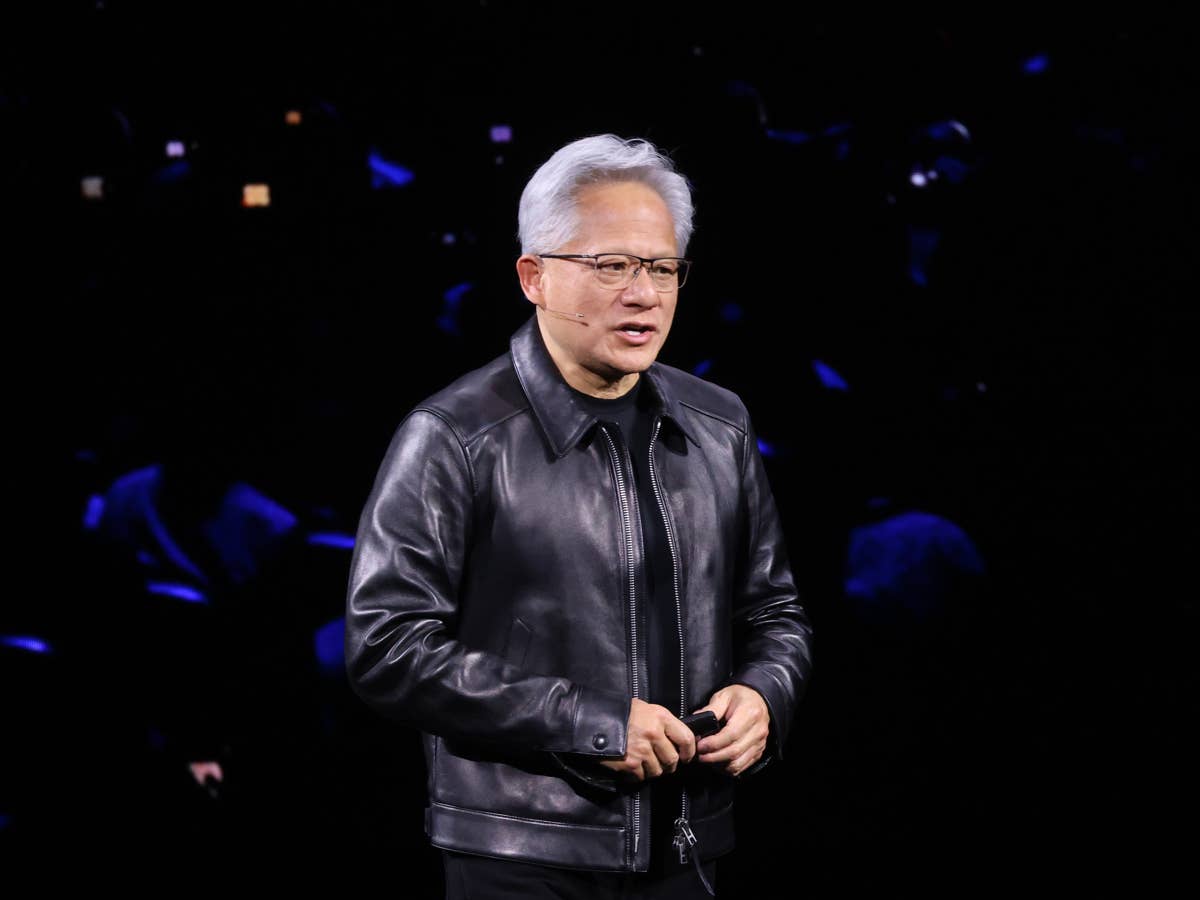
台下响起了礼貌而稀疏的掌声,而第二天华尔街的研报标题依然冷嘲热讽:《黄仁勋昂贵的科学幻想何时休?》。
The hall answered with polite, sparse applause — and the next day Wall Street's research-note headlines were still sneering: "When Will Jensen Huang's Expensive Science Fiction End?"
2010年,2011年……时钟一秒一秒地艰难走过。为了熬过这段青黄不接的至暗长夜,黄仁勋甚至不得不分兵突入智能手机与平板电脑的移动芯片战场去寻找活路。没人知道那座名为CUDA的孤岛究竟还要在冰海里漂流多久——直到2012年深秋,加拿大安大略湖畔多伦多大学的一间闷热卧室里,两块价值几百美元的GeForce GTX 580游戏显卡连续轰鸣运转了整整六天六夜,一道撕裂人类文明夜空的闪电,终于劈了下来。
2010 passed. 2011 passed... the clock ground through, second by arduous second. To survive that dark, fallow night, Huang even had to split his forces and thrust into the mobile-chip battlefield of smartphones and tablets in search of a way out. No one knew how much longer the lone island called CUDA would have to drift in the frozen sea — until late autumn 2012, in a stuffy bedroom at the University of Toronto, on the shore of Lake Ontario in Canada, two GeForce GTX 580 gaming cards worth a few hundred dollars thundered without pause for six days and six nights, and the bolt of lightning that would tear the night sky of human civilization finally struck down.
然而,在迎接那道AI惊雷之前,黄仁勋还必须在另一场血肉横飞的局部战争中,咽下一枚苦涩却至关重要的败果——他在移动互联网浪潮中的折戟沉沙。
But before greeting that thunderclap of AI, Huang first had to swallow, in another local war of flying flesh and blood, a bitter and all-crucial defeat — his shipwreck in the tide of the mobile internet.