第十六章:解剖“黄仁勋式”极权与扁平管理(专题章)
Chapter Sixteen: Dissecting "Jensen-Style" Authoritarianism and Flat Management (A Special Chapter)
在哈佛商学院与斯坦福商学院流传的所有现代企业治理教科书里,都有一条铁律:一位首席执行官直接管理的下属(Direct Reports)绝不能超过七到十人。一旦超过这个数字,管理者的精力就会被撕成碎片,企业必须设立首席运营官(COO)、执行副总裁与层层叠叠的事业部总经理,通过金字塔式的科层体系来运转。
In every textbook of modern corporate governance circulating through Harvard Business School and the Stanford Graduate School of Business there stands one iron law: the subordinates a chief executive directly manages must never exceed seven to ten. Once that number is crossed, the manager's energy is shredded to fragments, and the company must establish a chief operating officer (COO), executive vice presidents, and layer upon layer of divisional general managers, running itself through a pyramid-shaped hierarchy.
黄仁勋把这本教科书撕得粉碎,扔进了圣克拉拉的垃圾桶。
Jensen Huang tore that textbook to shreds and flung it into a trash can in Santa Clara.
在市值狂飙至四万亿美元、全球员工突破三万人的英伟达帝国里,没有COO,没有分管各业务的独立王国诸侯,甚至连高管专属的行政秘书与封闭式拐角办公室都被彻底消灭。在这张庞大网络的唯一圆心上,六十岁出头的黄仁勋直接统御着多达五十五至六十名直接向他汇报的核心高管!
In the NVIDIA empire — market value hurtling past four trillion dollars, global headcount past thirty thousand — there is no COO and no feudal lords ruling independent business kingdoms; even the administrative secretaries reserved for the top brass and the enclosed corner offices have been eradicated outright. At the single center of this vast web, Jensen Huang, in his early sixties, directly commands as many as fifty-five to sixty core executives reporting to him alone!
“在英伟达,没有人在向我‘汇报’,”黄仁勋曾在公开访谈中用近乎哲学式的傲慢定义自己的帝国,“我们不是金字塔,我们是一张没有层级的神经网络。信息在这栋大楼里必须以光速传播,任何中间层都是阻碍光速的杂质。”
"At NVIDIA, nobody 'reports' to me," Jensen Huang once defined his empire with an almost philosophical arrogance in a public interview. "We are not a pyramid; we are a neural network without hierarchy. Information in this building must travel at the speed of light, and every intermediate layer is an impurity that obstructs the speed of light."
如果你在2024年或2025年的任意一个工作日清晨走进英伟达总部“奋进号”大楼,就能亲眼目睹这台硅谷最奇特的战争机器是如何运转的。
If you walked into Endeavor, NVIDIA's headquarters building, on any weekday morning of 2024 or 2025, you could witness with your own eyes how the strangest war machine in Silicon Valley actually ran.
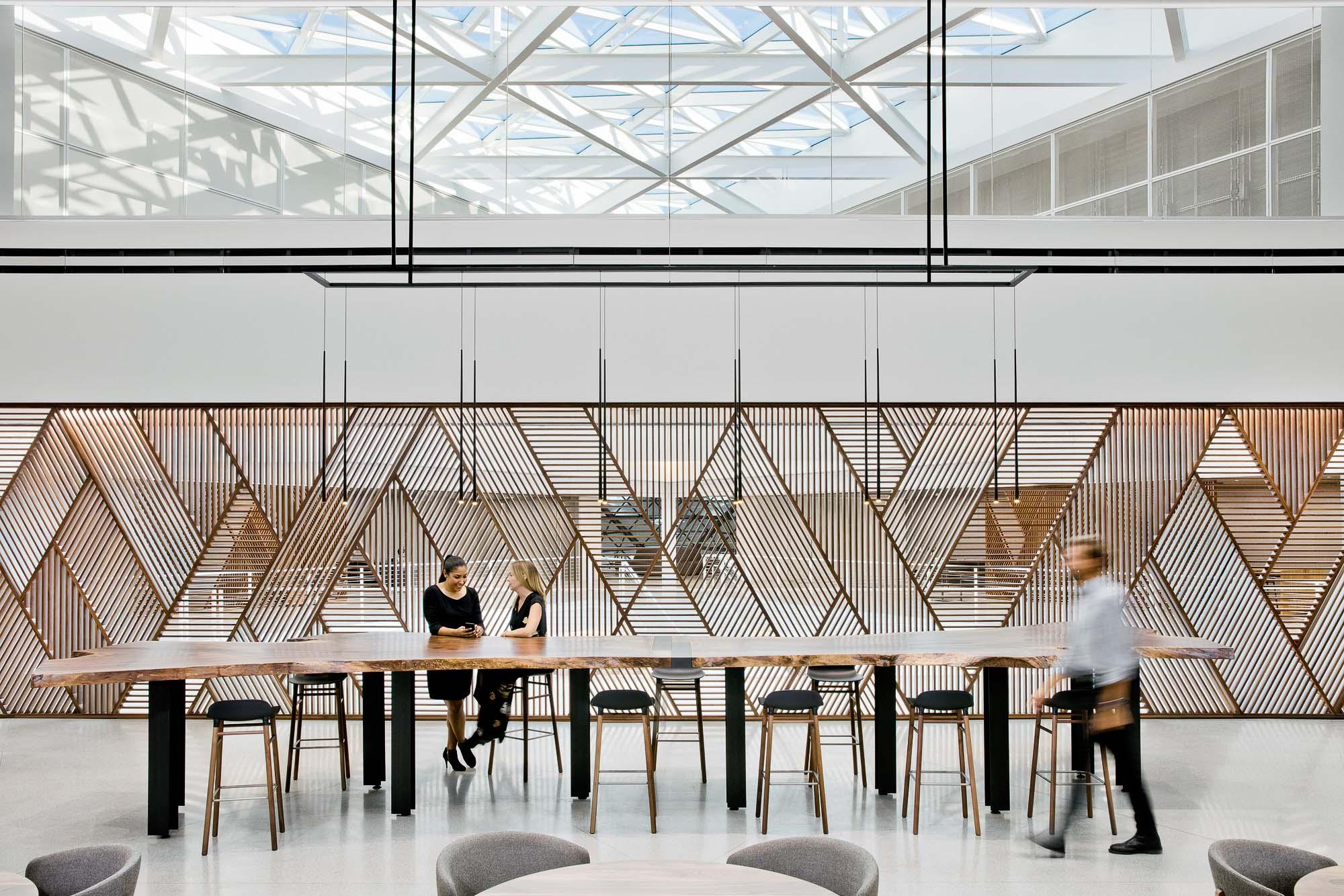
每天早晨五点半到六点,当加州的太阳还未升起,黄仁勋已经在家里喂完狗、做完运动,端着一杯浓茶坐到了电脑屏幕前,开始批阅他掌控三万大军的终极神经探针——“Top-5 邮件(最重要的五件事)”。
Every morning between half past five and six, before the California sun had risen, Jensen Huang had already fed the dogs and finished his exercise at home; with a cup of strong tea in hand he settled before the computer screen and began to review, like an emperor reading memorials, the ultimate neural probe with which he commanded his army of thirty thousand — the "Top-5 email (the five most important things)".
在英伟达,从刚毕业入职的基层芯片验证工程师,到掌管百亿营收的资深副总裁,每个人都被鼓励(甚至被要求)每周发送一封格式极简的纯文本邮件,列出自己手头正在推进、观察到或感到焦虑的五件最重要的事——严禁长篇大论,严禁粉饰辞令,每一点只能写寥寥数行。
At NVIDIA, from the newly graduated junior engineer verifying chips on the ground floor to the senior vice president presiding over tens of billions in revenue, everyone is encouraged (indeed, required) to send one plain-text email of the barest format each week, listing the five most important things they are driving forward, observing, or lying awake anxious about — long-winded disquisitions are strictly forbidden, varnished rhetoric is strictly forbidden, and each point may run to no more than a few spare lines.
黄仁勋每天要亲自快速扫读上百封来自帝国最末梢神经的Top-5邮件。
Every day, Jensen Huang personally speed-reads upward of a hundred Top-5 emails arriving from the outermost nerve endings of the empire.
这套机制产生了一种令所有官僚大厂难以企及的恐怖穿透力:在英特尔或谷歌,一个基层实验室里的微小技术苗头(比如某个新算子加速技巧,或是某家名不见经传的初创客户对显存带宽的抱怨),往往要经过经理、总监、副总裁层层过滤修改,半年后变成一份失真的精美PPT才能递到CEO面前;而在英伟达,星期天晚上一个二十五岁工程师发出的Top-5邮件,星期一早上七点就会收到来自Jensen本人的单行回复:“今天上午十点,带上你的数据来找我。”
This mechanism produced a terrifying penetrating force that no bureaucratic giant could hope to match: at Intel or Google, a faint technical stirring in a grassroots laboratory — say, a new trick for accelerating an operator, or an obscure startup customer's complaint about memory bandwidth — must typically pass through the filtering and polishing of managers, directors, and vice presidents, and only six months later, transfigured into a beautiful, distorted deck of slides, does it reach the CEO's desk; at NVIDIA, a Top-5 email sent on Sunday night by a twenty-five-year-old engineer receives a one-line reply from Jensen himself at seven on Monday morning: "Ten o'clock this morning, bring your data and come find me."
配合Top-5邮件的,是他同样离经叛道的会议法则。
Alongside the Top-5 email stood another set of meeting rules, heterodox in the same degree.
黄仁勋几乎从不与那六十名直接下属进行私密的“一对一例会(1-on-1)”,也不给任何人做年度KPI绩效打分。所有的战略争论、项目复盘与危机决策,全部放在几十号人共同列席的大群组会议上公开进行。他的逻辑冷酷而通透:如果我单独把信息告诉A副总裁,A回去再传达给手下,不仅浪费时间,还赋予了A“垄断信息、拉山头搞办公室政治”的特权;只有把所有人拉在同一间屋子里摊牌,让管硬件的、管CUDA的、管供应链的和管医疗汽车的同时听见每一个决策的来龙去脉,整张网络才能在瞬间完成自我对齐。
Jensen Huang almost never holds private "one-on-one meetings" with those sixty direct reports, and he assigns no one an annual KPI performance score. Every strategic debate, project postmortem, and crisis decision is carried on in the open, in large group meetings with dozens present at once. His logic is cold and translucent: if I tell the information to Vice President A alone, and A carries it back down to subordinates, I not only waste time — I grant A the privilege of "monopolizing information, raising a mountain fastness, and playing office politics"; only by pulling everyone into the same room to lay the cards face-up, letting the heads of hardware, of CUDA, of supply chain, and of healthcare and automotive hear the whole cause and course of every decision at the same moment, can the entire network complete its self-alignment in an instant.
但对于站在白板前的汇报者而言,这种大群组会议无异于一场令人双腿发抖的“公开处刑”。
But for the presenter standing before the whiteboard, such a large group meeting was nothing less than a "public execution" that set the legs trembling.
硅谷流传着一句话:“在英伟达工作,就像把手指插进220伏的电源插座里。”黄仁勋在会议上从不遵循美式职场那种温情脉脉的“三明治沟通法”(先夸奖、再委婉提意见、最后鼓励)。一旦他发现某个高管的逻辑存在漏洞、数据准备不扎实,或是犯了推诿塞责的低级错误,他会当着全屋四五十名同僚与下属的面,毫不留情地连珠炮发问、咆哮乃至将对方的方案批得体无完肤。
A saying makes the rounds of Silicon Valley: "Working at NVIDIA is like sticking your fingers into a 220-volt wall socket." In meetings Jensen Huang never practices the tender American office ritual of the "sandwich method" of communication (praise first, criticize by indirection second, encourage at last). The instant he discovers a hole in some executive's logic, thin and shaky data preparation, or a cheap, blame-shirking blunder, he will, before the forty or fifty colleagues and subordinates filling the room, fire off questions like a burst of machine-gun rounds, roar, and tear the other man's proposal to ribbons without mercy.
有新招进来的外部高管曾私下委屈地向老员工抱怨:“Jensen为什么不能留点面子,把我叫到走廊里私下骂我一顿?”
An outside executive, newly recruited, once complained privately and aggrieved to a veteran employee: "Why can't Jensen leave me a little face — call me out into the corridor and curse me out in private?"
黄仁勋对这种诉求嗤之以鼻:“我当众痛批一个错误,不是为了羞辱你个人,而是为了让屋子里另外四十九个人不必再把同样的蠢事重犯一遍!如果我私下骂你,那就只有你一个人长了记性,其他四十九个人依然蒙在鼓里——那才是对公司最大的残忍。”
Jensen Huang sniffed at such petitions: "When I flay a mistake in public, it is not to humiliate you personally; it is so that the other forty-nine people in that room need never commit the same folly all over again! If I scolded you in private, then only you would have learned the lesson, and the other forty-nine would still be wrapped in darkness — that would be the greatest cruelty of all to the company."
诡异的是,在这个高管动辄在会议室里被骂得脸色惨白的帝国里,英伟达的核心管理层与资深工程师离职率却是全硅谷最低的(常年低于3%)。原因不仅在于暴涨百倍的股票造就了遍地千万富翁,更在于黄仁勋另一条独特的驭人铁律——“绝不轻易开除犯错的人,而是折磨他们直到变得伟大(Torture them into greatness)”。只要你没有违背诚信底线,哪怕搞砸了上亿美元的流片,他也会在把你骂个狗血淋头之后继续把下一代产品交给你,逼着你在羞耻中完成救赎。
Eerily enough, in this empire where executives are routinely berated white-faced in conference rooms, the departure rate of NVIDIA's core management and senior engineers is the lowest in all Silicon Valley (year after year below 3%). The reason lies not only in a stock that soared a hundredfold and scattered multimillionaires across the ranks, but in another singular iron law of Jensen Huang's art of ruling men — "never lightly fire the one who has made a mistake; torture them until they become great." So long as you never crossed the bottom line of integrity, even if you wrecked a tape-out worth upward of a hundred million dollars, he would hand the next-generation product back to you after flaying you to the bone, forcing you to work out your redemption in shame.
在很长一段时间里,这套被外界奉为神明的“黄氏极权扁平管理学”,确实创造了人类商业史上最高的组织效能。它让一家市值四万亿美元的巨无霸,依然保持着1997年桑尼维尔三十六人敢死队般的敏捷与饥渴。
For a very long stretch, this "Huang-style authoritarian flat management," enshrined by the outside world as divine, did indeed produce the highest organizational effectiveness in the history of human commerce. It kept a four-trillion-dollar colossus moving with the agility and hunger of the thirty-six-man death squad of Sunnyvale in 1997.
然而,物极必反。当权力的太阳耀眼到极致时,没有人敢直视太阳黑子深处正在蔓延的致命裂痕。
Yet what is driven to its extreme must turn against itself. When the sun of power blazes at its most dazzling, no one dares look straight into the sunspots, where a fatal fissure is creeping outward.
站在2026年深秋的风暴废墟上回望,公司治理学者与硅谷局内人才猛然惊觉:正是这套被吹上天际的“一人统御六十将”扁平帝国,在制度底层埋下了三颗足以在瞬间炸毁黄仁勋本人的定时炸弹。
Looking back from the storm-wrecked ruins of the deep autumn of 2026, scholars of corporate governance and insiders of Silicon Valley at last awoke with a jolt: it was precisely this flat empire of "one man commanding sixty generals," praised to the sky, that had buried at the bottom of its institutions three time bombs capable of blasting Jensen Huang himself to pieces in an instant.
第一颗炸弹,是权力高度极化导致的“内部监督真空”与“接班人荒漠”。
The first bomb was the "vacuum of internal oversight" and the "desert of successors" brought on by power polarized to its extreme.
因为消灭了COO与二号人物层级,那五六十名直接汇报的高管——从掌管核心GPU工程的资深元老、首席财务官科莱特·克雷斯(Colette Kress),到分管汽车、机器人以及医疗健康业务的副总裁金伯莉·鲍威尔(Kimberly Powell)——他们彼此之间只是平行的齿轮,头顶上只有黄仁勋这一尊唯一的神明。
With the COO and the tier of a second-in-command abolished, those fifty or sixty directly reporting executives — from the veteran elders presiding over core GPU engineering and the chief financial officer Colette Kress, to the vice president overseeing automotive, robotics, and the healthcare business — Vice President Kimberly Powell — stood to one another merely as parallel gears, with Jensen Huang alone, a single deity, above their heads.
在早期创业阶段,大家还能像兄弟一样跟黄仁勋拍桌子争辩;但当黄仁勋头顶笼罩着“AI教父”的万丈金光、每一次豪赌都被历史证明正确之后,整个高管层与董事会对他产生了一种近乎绝对顺从的路径依赖。在这个没有二号人物制衡、连人力资源与法务合规部门都直接仰赖他个人鼻息的扁平宫殿里,谁敢去质询最高统帅的私人行程?谁敢去过问他与某位海外女客户晚餐的边界?
In the early startup years, people could still pound the table and argue with Jensen Huang like brothers; but once the boundless golden radiance of the "godfather of AI" settled over his head and every audacious gamble was proven right by history, the whole executive suite and the board developed in him a path dependence verging on absolute obedience. In this flat palace, where no second-in-command stands as a check and where even human resources and legal compliance draw their breath directly from his nostrils, who would dare interrogate the supreme commander's private itinerary? Who would dare ask after the boundaries of his dinner with a certain female client overseas?
第二颗炸弹,恰恰就埋在那条“六十人直接汇报线”的致命合规红线之上。
The second bomb was buried precisely along the fatal compliance red line of that "sixty-person direct reporting line."
在传统金字塔企业里,CEO与一名业务线副总裁之间往往隔着集团总裁或高级执行副总裁;但在英伟达的扁平架构下,2008年便加入公司、一路被提拔执掌Clara医疗健康AI版图的美女副总裁金伯莉·鲍威尔,正是直接向黄仁勋本人汇报工作的核心下属之一!
In a traditional pyramid company, a group president or a senior executive vice president usually stands between the CEO and a business-line vice president; but under NVIDIA's flat architecture, Kimberly Powell — the beautiful vice president who joined the company as early as 2008 and rose step by step to govern the Clara healthcare AI domain — was precisely one of the core subordinates reporting her work directly to Jensen Huang himself!
现代美国上市公司最不可触碰的高压电网,从来不是老板在外面有了婚外情,而是“上下级直接汇报关系中的私情(Undisclosed Relationship with a Direct Report)”。因为你的每一次薪酬调整、股票期权授予、预算倾斜与职务晋升,都直接握在枕边人的笔尖之下——这构成了最赤裸裸的权力寻租、利益冲突与对全体股东的信义违约。更具宿命讽刺意味的是,英伟达那本严禁内部利益冲突、要求高管以身作则的《商业行为准则》(Code of Conduct),扉页上恰恰印着黄仁勋亲笔签署的训诫:“规则面前没有例外,诚实与透明是我们一切成就的基石。” 当他亲手跨过那条由自己画下的扁平汇报线时,他实际上已经把刀柄递到了律所调查员与机构股东的手里。
The high-voltage grid no modern American listed company may ever touch has never been the boss having an affair outside the office; it is an "undisclosed relationship with a direct report." For every salary adjustment, every stock-option grant, every budget tilted your way, every promotion you receive, rests directly beneath the pen tip of the person sharing your pillow — the most naked conceivable rent-seeking, conflict of interest, and fiduciary breach against every shareholder. And with a crueler irony of fate: on the title page of NVIDIA's Code of Conduct — the volume that strictly forbids internal conflicts of interest and demands its executives lead by example — there stands exactly the admonition signed in Jensen Huang's own hand: "There are no exceptions before the rules; honesty and transparency are the bedrock of everything we achieve." The moment he stepped with his own feet across that flat reporting line he had drawn himself, he had in effect passed the hilt of the knife into the hands of the law firm's investigators and the institutional shareholders.
而第三颗、也是最终决定他生死结局的炸弹,写在那份冷冰冰的纳斯达克股权结构表上。
And the third bomb — the one that would finally decide the outcome of his life or death — was written on that ice-cold NASDAQ table of ownership structure.
外界总把黄仁勋与马克·扎克伯格、拉里·佩奇或埃隆·马斯克相提并论,以为这位统治英伟达三十三年的创始人在自己的帝国里拥有生杀予夺的绝对产权。
The outside world forever ranks Jensen Huang alongside Mark Zuckerberg, Larry Page, or Elon Musk, imagining that this founder, who has ruled NVIDIA for thirty-three years, holds within his own empire the absolute property right of life and death over all.
这是一个天大的错觉。
This is an illusion of cosmic proportions.
由于英伟达诞生于1993年——远在2004年谷歌开创科技股“同股不同权(AB股双层股权结构)”风潮之前——英伟达自1999年上市起,实行的一直是最传统的“一股一票”平权制度。经过三十多年的多轮融资稀释、员工期权池增发与高管减持,截至2026年秋,尽管黄仁勋身家超过一千四百亿美元,但他手中持有的英伟达普通股比例仅仅只有约3.58%!
Because NVIDIA was born in 1993 — far ahead of 2004, when Google set off the tech-stock vogue for "different rights attached to different shares (the dual-class structure)" — NVIDIA has practiced, ever since its 1999 listing, the most traditional "one share, one vote" regime of equal rights. Diluted across more than thirty years of successive financing rounds, employee option-pool issuances, and executive sell-downs, as of the autumn of 2026, although Jensen Huang's personal fortune surpassed $140 billion, the proportion of NVIDIA common stock in his hands came to only about 3.58%!
与之形成鲜明对比的是:扎克伯格虽然只持有Meta约13%的经济股份,却通过每股10票的B类超级股票牢牢攥着超过60%的绝对投票权,哪怕全华尔街和国会山联手也休想把他从董事会投出去;而黄仁勋手里的3.58%选票,在先锋领航(Vanguard)、贝莱德(BlackRock)、富达(Fidelity)等华尔街巨型机构股东近70%的筹码面前,脆弱得就像狂风中的一片树叶。
The contrast could not be starker: Zuckerberg holds only about 13% of Meta's economic interest, yet through Class B super-voting shares carrying ten votes apiece he clutches an absolute voting stake above 60%, and even if all of Wall Street and Capitol Hill joined hands they could never vote him off the board; Jensen Huang's 3.58% of votes, set against the nearly 70% held by Wall Street's giant institutional shareholders — Vanguard, BlackRock, Fidelity and their kind — is as fragile as a single leaf in a raging wind.
在顺风顺水的岁月里,他根本不需要超级投票权——四万亿美元的涨幅就是他最坚硬的免死金牌,那群平均任期长达十余年、跟着他赚得盆满钵满的英伟达独立董事们,对他言听计从得像一群温顺的绵羊。
In the years of fair wind and smooth water he had no need of super-voting rights at all — the climb to four trillion dollars was itself his hardest gold-plated warrant of survival, and NVIDIA's independent directors, averaging ten years and more of tenure and grown fabulously rich at his side, followed his every word like a flock of docile sheep.
但这种建立在“道德完美神话 + 业绩永远狂飙”之上的精神皇权,容错率其实是零。
But a spiritual throne built upon "a myth of moral perfection plus performance that gallops forever" has a tolerance for error of exactly zero.
2025年,黄仁勋的儿子黄胜斌(Spencer Huang,曾在中国台北开酒吧七年,后修读AI进入英伟达担任机器人产品线经理)与女儿黄敏珊(Madison Huang,曾任法国蓝带厨师与奢侈品营销,后升任英伟达Omniverse业务高管)在公司内部日渐活跃,硅谷甚至一度传出对“家族色彩”的微妙议论。而在“旅行者号”大楼明亮的天窗之下,这位每天工作十四个小时、六十二岁依然不知疲倦的统帅,正步入人生权力最膨胀、也最孤独的深水区。
In 2025, Jensen Huang's son Spencer Huang — who had run a bar in Taipei for seven years before studying AI and joining NVIDIA as a robotics product-line manager — and his daughter Madison Huang, once a Le Cordon Bleu chef in France and a luxury-goods marketer, later promoted to an executive post in NVIDIA's Omniverse business, grew daily more active inside the company, and Silicon Valley even buzzed for a time with delicate talk of "family color." And beneath the bright skylights of the Voyager building, this commander who works fourteen hours a day and knows no weariness at sixty-two was walking into the deepest water of his life, where power swelled to its fullest and loneliness with it.
所有的火药都已经填满底座:一个没有防火墙的3.58%股权结构,一套缺乏内部制衡的六十人直接汇报网,再加上一桩跨越太平洋的地缘政治绝密风暴。
All the powder was already tamped into the base: a 3.58% ownership structure without a firewall, a sixty-person direct-reporting web lacking any internal check, and upon these a top-secret geopolitical storm crossing the Pacific.
只差最后一星火柴,圣克拉拉的玻璃王座就会在烈焰中化为齑粉。而划亮这根火柴的地方,不在硅谷,而在华盛顿特区的波托马克河畔与新加坡炎热的码头仓库之间。
One last struck match was all that was lacking for the glass throne of Santa Clara to be ground to powder in the flames. And the place where that match would be struck lay not in Silicon Valley, but between the banks of the Potomac in Washington, D.C., and the sweltering dockside warehouses of Singapore.